
What is a Ribbon Microphone:
A Ribbon Microphone is a type of microphone that uses a thin aluminium, duralumin or nanofilm of electrically conductive ribbon placed between the poles of a magnet to produce a voltage by electromagnetic induction. Ribbon microphones are primarily used for vocals and to record audio bidirectional, which means that they pick sound equally well for the front and back of the microphone.
Ribbon Microphone are better than others in a way as they produce an audio that is close to what the human ear hears. However, the microphone is very sensitive so in loud areas with very strong sounds the thin coil inside can break easily and also if it is dropped a hard surface.
What is a Condenser Microphone:
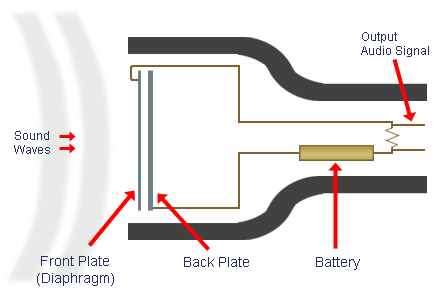
Condenser microphones are most commonly found in studios. They have a much greater frequency response than other microphones and transient response. Transient response is the ability to reproduce the ‘speed’ of an instrument or voice, they also generally have a louder output but are much more sensitive to loud sounds.
Compared to a Dynamic Microphone the Condenser has a more superior and accurate sound quality however, it is more fragile than the Dynamic Microphone.
What is a Dynamic Microphone:
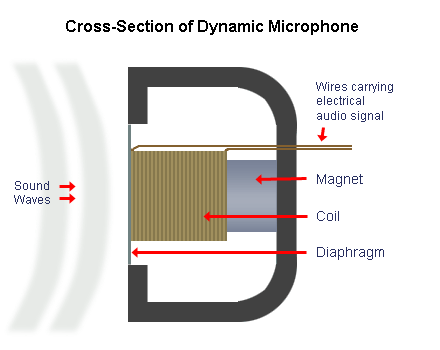
Compared to the Condenser Microphone, the Dynamic Microphones are much more durable as they are resistant to moisture and get dropped or thrown onto hard surface, which makes them the best choice for if you are doing on stage performances. Unlike the Condenser microphone they do not require their own power supply however the sound quality that is produce is not as accurate.
What is a Shotgun Microphone:
Shotgun Microphones are basically just condenser microphones with an extreme directional pickup pattern mounted on rig that you hold over the actors heads to capture their dialogue. Shotgun Microphones are mainly used in the productions for films and television shows.
How a Ribbon Microphone works:

How a Condenser and Shotgun Microphone works:
How a Dynamic Microphone works:
Practical Applications
Ribbon:
- Recording Vocals (Singing, Dialogue.)
- Recording Acoustic Instruments.
Condenser:
- Foley.
- Audio production in a studio.
Dynamic:
- On stage performance.
- Live concerts/gigs.
Shotgun:
- Recording actors dialogue.
Example of Products
 AEA R44 Series Ribbon Microphone.
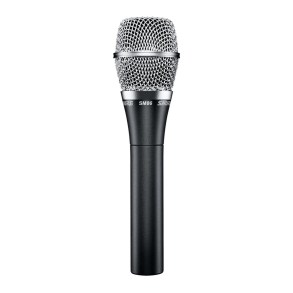 Shure SM86 Condenser Vocal Microphone.
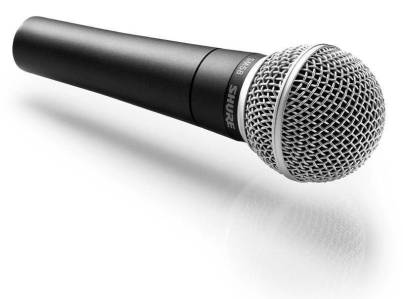 Shure SM58 Dynamic Microphone.
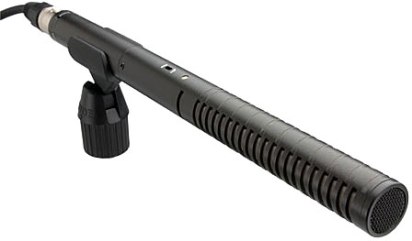 Rode NTG-2 Shotgun Microphone.
The 3 Main Polar Patterns
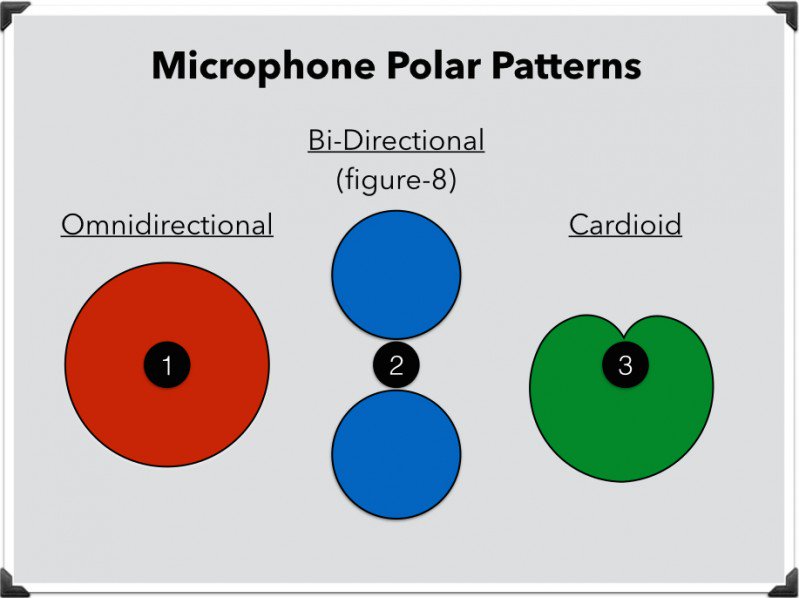
Each number is a microphone with a certain Polar Pattern.
The 1st one has an Omnidirectional polar pattern which means that the entire red are is equally sensitive to sound.
The 2nd is an Bi-Directional polar pattern (also known as a figure of 8) which is only sensitive to sound from the front and the back of the microphone.
The 3rd is a Cardioid polar pattern and it is more sensitive to sound from the front of the microphone than the sides and the back is ignored.
Practical scenarios for the Polar Patterns
Omnidirectional:
- Ear to ear sounds
- To record ambience
Bi-Directional
- Singing
- Narration
- Dialogue
Cardioid
- Dialogue
- Recording Instruments.
 I'm a 90's Child...