Self Reflection

I was looking forward to this unit as my passion is filming and film production. I throughly enjoyed doing film and film production last year so I was looking forward to doing it this year. However once it came to me filming my short film I had a few problems.

My first hurdle of problems came with the fact that I think that my idea was a bit too extravagant and ambitious for this particular unit and by the end of this unit I realised that my original idea would work better for my end of year project rather than just one unit.

If I could do the project again I would plan it better and do better location scouting and not get stressed out. I also like doing sound design because it gave me the freedom to look at a piece of film and include sounds that i heard in my head when watching the short part of a film without any sound.

I sometimes enjoy planning things as it makes me excited to actually film the short film. I really enjoyed creating the animatic as I have never done one before and it helped me a lot with seeing how the scene should look and will be something good to use for other short films in the future. Also by doing the animatic I learnt a greater and better knowledge of premier pro than what I already know.  another thing that I really enjoyed doing was the storyboard as I have a strong passion for art and drawing.

When it came to me filming my actually film I came to a lot of different hurdles and situations that made me suffer with creating this film.

The film that I did end up using for this project I had a lot of fun filming and enjoyed it very much, as it was something fun and quirky, I also really enjoyed editing this as it gave me the freedom to do it as I please and how I wanted it to look. I liked making it a comical short film as ones that I have previously made before have been known to be serious so it was fun and enjoyable to make something of a different genre.

Overall I did like the finish result of the unit of work as the film itself was fun to make, however the zombie film didn’t exactly work out I still had a backup that I could use and this worked out well.  I hope that the next time that I have the chance to make the zombie film that I had originally plan that it will work out better and I will be able to complete it in time.


1 Minute Short Film Journal

At the beginning of this task I was a few lessons behind as I was in Nantgarw originally and transferred back down to the Aberdare campus and had missed a few lesson and I had to come up with a couple of ideas quickly. My original idea was inspired from the theme song for the film “Tetsuo – The Bullet Man.” The idea was that this character was in perpetual darkness, not knowing how he got there when he suddenly this ominous ray of light shined upon him, terrified he runs away and the light appears again, he runs again and again until finally he works up the courage to fight back where you then find out he was in a driving accident and the light was the afterlife however, because he fought back he was allowed a second chance at life. This would have been a good idea and was what I was planning on doing until I got inspired by something else.

28 Weeks Later

In the sequel to the well known 28 Days Later there is a scene that inspired me a lot for my idea. (Link below for the scene)

https://www.youtube.com/watch?v=VVnz6hlC3pQ

In 28 Weeks Later a man tries to leave his son who is hiding in a wardrobe from the blood thirsty Zombies. His wife refuses and rushes to her sons aid when a zombie bursts through the door. The Zombie stands there staring back and forth between the husband and his wife, his wife pleads for help from the undead, however he just stares back in fear as he closes the door behind him. He then escapes through a window to the outside of the house while his wife and son flee into another room. As he runs from a horde of Zombies into a field he turns back to the house and see his wife grabbed away from the window. The scene then has a lot of drone shots and close ups of all the zombies chasing him through the field.

This scene inspired me to do something similar where instead of a man leaving his wife and child, It would be a child leaving his abusive and religious father to be eaten by zombies and then he is chased through an alleyway. However during production I ran into some problems.

The Problem

Before I actually began filming I lost a lot of motivation to do anything, I did not know what I wanted to do anymore as a future career, I did not know what to do for my short film and I was just really low at that point in time. When I did come around to actually caring about anything I was in a rush to complete everything and have it done, I was worried I was not going to succeed in this project. At this point I had created all of the paperwork for the project and was ready to begin filming, I planned to fill all of the interior scenes besides the ending and some of the scenes in the garden on the Friday and film the rest on the Saturday. When Friday came along on I had all the cast over, done the makeup and began filming. While filming in the garden everything became a mess, I could not get the shots I needed and it was not turning out the way that I had pictured it would look in my head. Because of this I thought that it would be best if I had waited until the Saturday where I would have had all of the cast in one place and then I could film in all then in one piece. On the Saturday morning a lot of my cast who said they would be there to help me film cancelled on me and because of this I decided to cancel the shoot, gave up and just watched Fireball XL 5 in bed all day until my wonderful, creative, amazing girlfriend came home from work and told me that I should just use the short film I created before hand for my younger brother and then bought me a Chinese to cheer me up.

End.

Minorities in the Media

How are minorities represented in media?

All minorities are represented in the media different than each other however some have similar traits.

Black:

  • Black people are seen as being the superior race in athleticism and strength.
  • They are known for having a larger genitalia than other races.
  • They are said to be the main reason for gang violence and crime.
  • Its said that black people are the main users of Marijuana.

Asians:

  • Asians are seen as being the smartest race and are stereotypically seen as being good at mathematics and science.
  • Asians males are seen as having small genitals.
  • In china they are seen as having a high crime rate with gangs, hitmen and the mafia with the Yakusa.

White:

  • White people often see themselves as being the superior race on planet earth, mostly in America.
  • White people are seen as being the most racist.

Muslims and Pakistanis:

  • The biggest thing Muslims, Pakistanis and other ethnicity with a deep religion are seen as terrorists these days.

Gay:

  • Christians see them as wrong


How are niché magazines/radio helping to support minorities?

Magazines and radio these days have helped greatly with supporting the different  minorities out there in the world. There are many different types of magazines and radio out today that have many different subjects and hobbies for different people. These radio broadcasts and magazines include subjects like wildlife and cars, tattoos, LGBT for example compared to your popular everyday showbiz, gossip and news. Some of the niché magazines and radios are:

  • BBC Cymru
  • Inked
  • Diverse
  • 24/7 Niche Radio
  • Xbox/ Playstation/PC magazines


49271c34a25c2eb3a9081a32351d6841

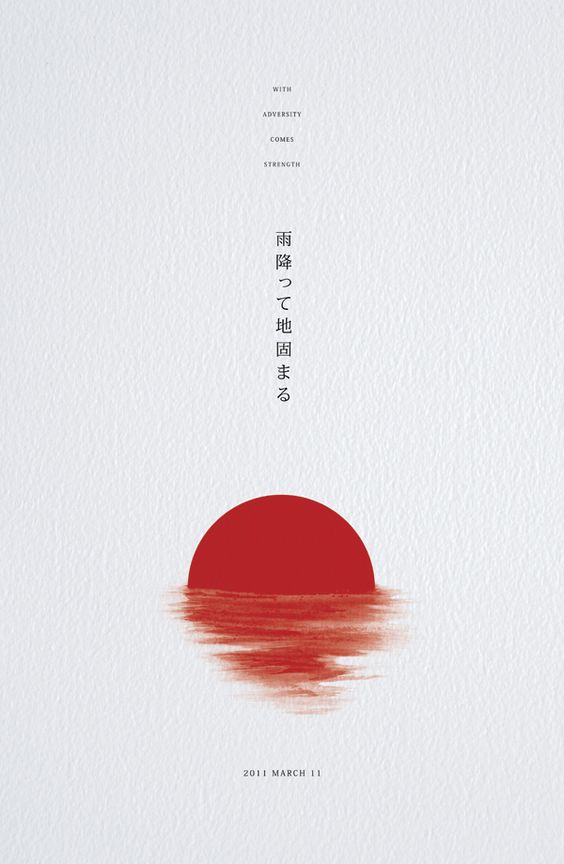
This is a good example of Japanese culture. Even though this particular poster is very simplistic with its style and its design, you can still see the Japanese essence behind it as it looks very similar to the Japanese flag. The brush to create the reflection in the water of the sun is a great way of showing how a lot of Japanese art and text is created using brushes and paint.

edf127ddb6532f7bb97ffbe1111cdd5e

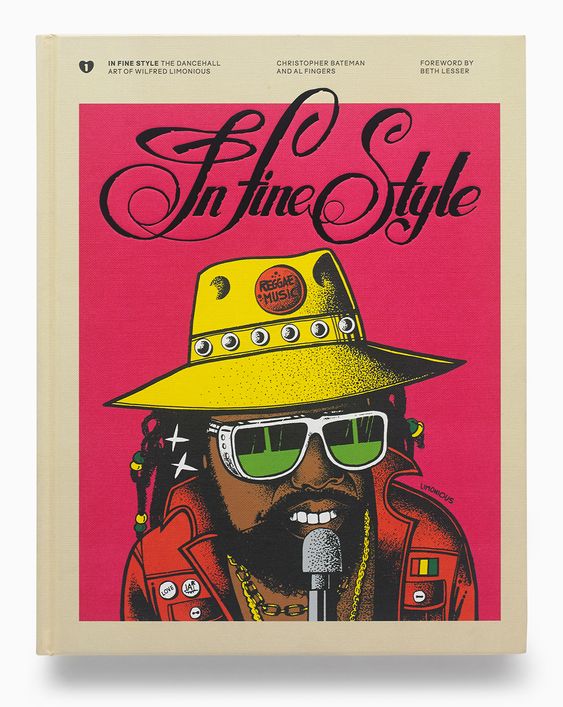
This piece shows off a lot of the Jamaican style; The red, green and yellow colours, vibrant visuals, styled typography. All you have to do is look at this piece and you now it is of Jamaican culture, if its not noticeable enough with the Jamaican flag on his jacket he also has the ‘Reggae Music’ badge on his hat, his dress sense is in the stereotypical style of a Jamaican/Rastafarian.

Applying for University Timeline

Level 3

To get into University we will first need to complete and pass the level 3 course we are attending at the moment, whether we go onto the extended diploma or not we still need to finish this level as it gives us a boost into getting accepted into which ever University we decide to join.

University Options

Before you join a University you must first choose from a wide range of Universities around the world which are suitable for you desired career path. For example if you want to become Film Maker then here are a few Universities which are tailored to that career or have that as a course option:

  • London Film Academy
  • University of Kent
  • University of Warwick
  • University of Essex

Attend an Open Day

After deciding on which University or several you would like to attend, the best thing to do would be to attend an open day so you can see how the campus is and if the University is right for what you want to do, also do not be afraid to ask questions, that is what an open day is for.

Applications


Unit 3: Business Card

Types of Employment

Freelance:

Freelance is the most flexible form of employment as you control when you work and when you have time off. If you don’t like a job offer that has come your way then you don’t have to accept it and can look for another. If you’re working for someone who you don’t particularly like, after you have finished that job with them you can decide yourself not to work with them again. Also if you have a family then as a Freelancer you can set you working times around you family. However, being a freelancer does come with its disadvantages. For example you don’t have a steady work flow and may go a few months without any work which means no money to fund your personal needs. Lack of benefits like payed vacations and health insurance.

Fixed Term:

With a Fixed Term employment you have the luxury of being paid like a permanent however you have to work there for a certain amount of time for example 6 to 12 months without being able to leave as you are contracted to that job. Also after your contract ends you may not be able to get another job with them and it does not guarantee a full time job afterwards.

Voluntary:

Volunteering is a great way to learn or develop a new skill that otherwise may be difficult to obtain. Keep in mind that it’s never too late to enhance your skill set.

Permanent:

Pros

  • Maintain set work hours and/or work schedule.
  • Less financial risk due to receiving a regular pay check.
  • Maintain a continued expectation of work.
  • Employer typically provides paid time off, vacation time, and/or holiday pay.
  • Income taxes are deducted from pay check.
  • Might receive additional employer incentives or benefits, such as bonuses.

Cons

  • Typically have a daily commute to an office.
  • Only have a limited number of days off per year.
  • Provided with a limited scope of work.
  • Might not have the ability to branch out and try different types of work.
  • Less freedom to decide one’s own schedule.
  • Less opportunity to negotiate pay rates.

Wales has been a large contributing country to the TV and Film industry because of our wonderful landscapes, its not just that though we also have a few world class studios and a history of producing television shows that appeal to a large variety of audiences for example Doctor Who which is the longest-running science fiction television show.

There are 53,000 people who are employed in the creative industries in wales however there are many skills gaps. For example there are skill gaps in the Welsh Language, technical skills, sales and marketing and especially in VFX.

The career paths I have chosen are:

  • Film Director
  • Camera Operator
  • Screen Writer

Film Director

A Director is the main body of any film or television show. The Directors work very closely with producers and the screenwriters to make someones idea and dream have a visual representation. Directors needs to understand the significance of scenes and how to shoot them. Directors also have the power to change the structure of a scene or even make a directors version of the script to change the pace or to create dramatic tension. The directors version of the script is also what all crew members work off of. Directors are responsible for both the creative and technical aspects of the production where they work to the projects budget, keeping the production under control and creating a safe and creative environment for the crew and actors.

Skills needed to be a director:

  • Ability to form ideas and to think visually.
  • Ability to create a clear and creative style for the production.
  • Great attention to detail.
  • Very methodical and calm when it comes to working in a high stress environment.
  • Knowledge with the entire production process.
  • Excellent verbal and written communication skills.
  • Able to lead and motivate their actors and crew.
  • They must have initiative and problem-solving.
  • Able to see the broader picture and meaning.
  • Ability to have diplomacy and sensitivity when it comes to working with writers, producers, actors and crew members.
  • Knowledge of health and safety procedures.

Camera Operator

Camera Operators follow the DoP (Director of Photography) and the Director with shot compositions and they are responsible for all the aspects of camera operation and the preparation for the shoot. Its important for camera operators to keep watching and analysing new Television shows and Films to keep up to date with trends and styles of the modern media. Also many camera operators will develop additional skills such as using a steadicam, aerial shots and underwater experience to improve employ ability.

The skills needed to be a camera operator are:

  • Need to have an artistic vision.
  • Strong creativity and attention to detail.
  • Have an eye when it comes to colour and lighting.
  • Good technical knowledge of digital processes and camera equipment.
  • Knowledge of photography, painting and of moving image.
  • Physical coordination and strength.
  • Having the ability to accept and give direction.
  • Excellent communication skills.
  • Knowledge of relevant health and safety procedures.

Screenwriter or Scriptwriter

Screenwriters provide a blueprint which the producers, director, production designers, composers and editors, cast and crew use to make an idea be able to turn into a visual and where a reader can see it cinematically. The screenplay does not only have fascinating characters it must also have an exciting plot with a great premise for a marketable film however, it must have logical principles and a dramatic construction, as well as a industry format and style. Screenwriters must produce a highly creative screenplay with originality.

Skills a Screenwriter/Scriptwriter needs:

  • A strong understanding of film narrative, and knowledge of different audiences tastes and trends from the past and future.
  • A passion for cinema and film making.
  • Ability to search out new types of talent and creative relationships.
  • Excellent all-round communication skills.
  • Able to sort out story problems using creativity, discretion and great flexibility.
  • Keen insight into all aspects of screenplay tones, genre, style, structure, character, plot, action and dialogue.
  • An understanding of development for example log lines, premises, synopses, beat outlines, step outlines, treatments and rough drafts.
  • A strong understanding of how to use dramatist’s tools such as comic irony, suspense, mystery and dramatic tension.

When it comes to choosing only one career path I find it very difficult to do that. The reason why that is comes from me being used to doing everything when I have created short films in the past, I created the scripts and storyboards, I directed the production, acted in some of them and then did all the post production and posted them on my YouTube channel. Originally I wanted to be an actor but then I grew a strong passion in photography and creating short films and animations and my dream of becoming an actor faded away and I wanted to ‘make my own films’ however, before I joined this course I did not realise how hard it really is to make your own films yourself. Really I’d primarily want to be an auteur, for example Quentin Tarantino the creator of amazing films such as Kill Bill, Pulp Fiction, Django Unchained, Reservoir Dogs and many more is not just the director, he writes the scripts, directs the actors, probably operates the camera and he also acts in a few and that is what I hopefully will do but I do understand it is very rare to have that chance.

So when it comes to figuring out what career path I want to do I would say that I would choose being a director however when it comes to university I have an idea. My idea is to study in a directing course for how many years, then after that study on a course for script writing, then camera operating and finally post production editing. Now I understand that doing that will have me be in university for 6 years or even more, but I believe that doing that will give me more of a chance at getting more jobs and starting a career as an auteur like I want to and have full creative control of films I want to make. Granted I will not be able to be an auteur straight after I have finished college and I will have to publish my own scripts to producers, directing someone else’s film idea or be an editor for someones production, but doing that will allow me to progress in reaching my goal and getting the career I want.

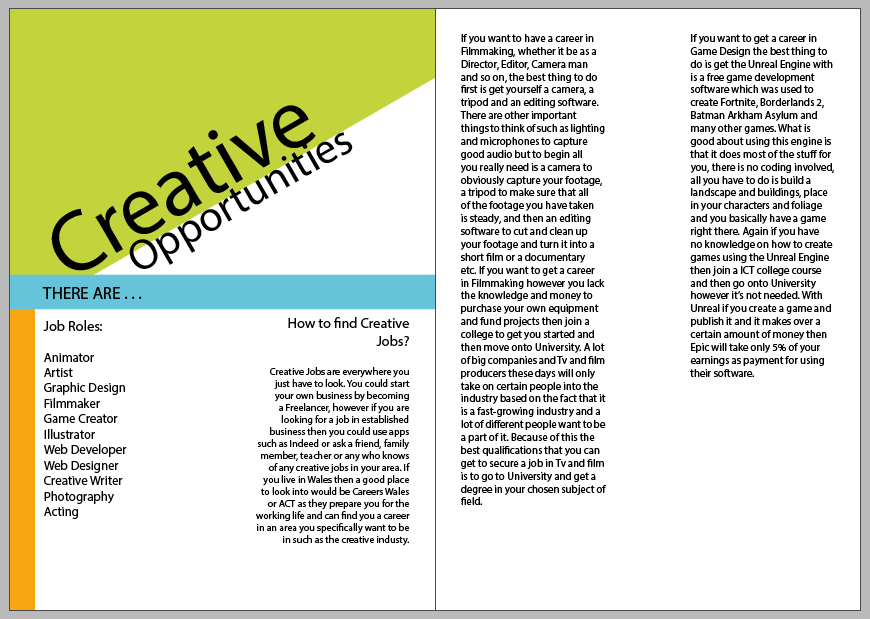
These are some of the different careers in the creative industries and how much you can earn from them:

Animator: £15,000 – £40,000

Web Designer: £18,000 – £30,000

Graphic Designer: £18,000 – £35,000

Illustrator: £18,000 – £40,000

Editor: £19,000 – £38,000

Video Maker/Producer £23,500 – £50,500


Here is a piece I created on InDesign which shows Creative Opportunities and how to get there.
Screen Shot 2019-03-08 at 12.37.19


I have been tasked to create a business card for myself which will be shown at the end of year exhibition. This task is great, not only does it go towards my grades and is a smooth and quite simple task, but it also helps me put myself out into the world and will help me start a business of my own. I scoured Pinterest in search of ideas for my own design and found a few that I liked.

What is a business card you may ask. A business card is another form of a personal identification except as you can guess by its name it is an identification for your business and it also shows simply who you are, what you do and it also shows of your style and skills on a small piece of card.

With the advancement of Social Media and the Internet you’d believe that business cards would have fallen out of popularity and use, but on the contrary business cards are still in high use

661f8b8b8ecbc05ce150137815bd3ae0

Even though I do not usually go for just plain black and white I feel like it does work here. The artwork on the front of the business card is good as it shows you straight away that Nick Patton is an artist.

50f389a49ce68a560f3a5d9b7405eab2

I love the colour palette that this business uses and I love the way the text fades which goes well with what the text says: “Time Passes by” as it symbolises the passing of time.
ab106d78b358819004f4f222a0e02f12

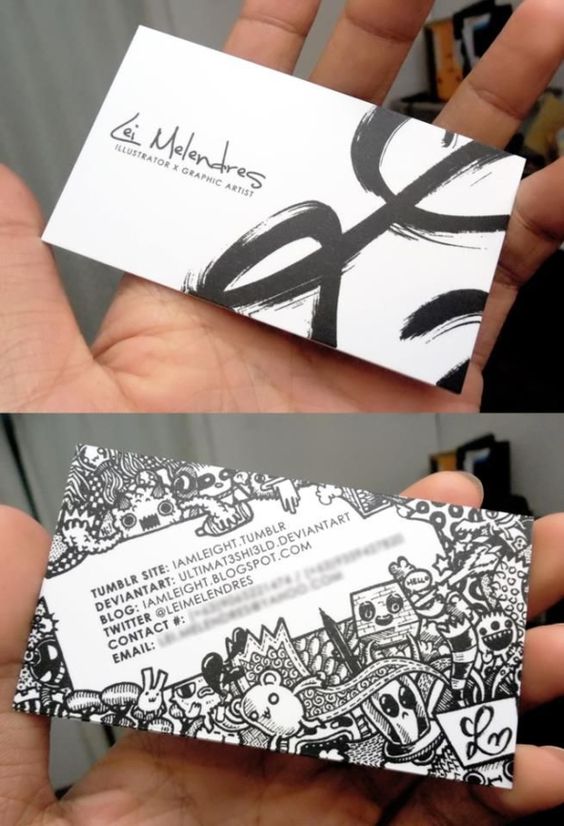
With this business card I only really like the cartoon designs on the back, I love the style.
tumblr_ma9krdayn21qzwuhxo2_1280

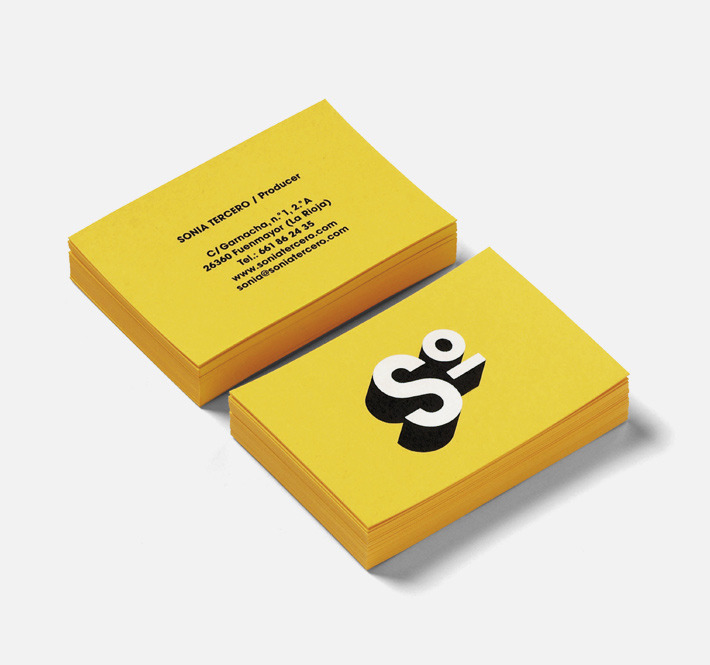
Minimalistic, yellow, bold text with a drop shadow, what more could you ask for in a design. However just by looking at it without reading it you wouldn’t know what the profession of the person is as there is no indication of it in the design.


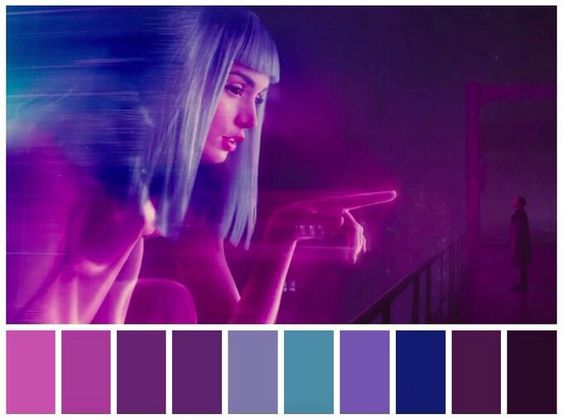
I prefer the minimalistic style as I feel that when there is a lot on the page, card whatever that it distracts the viewers eyes and they do not take in the information that needs to be taken in or the information that you want them to take in. However I do feel that having just a plain black and white business card is boring as there is no vibrance to it and black and white is used too often so people will just see it as another business card, there is no creativity. I feel it is best to have some sort of colour in your graphic work however, black and white does work in some instances. Here are some colour palettes that I like.

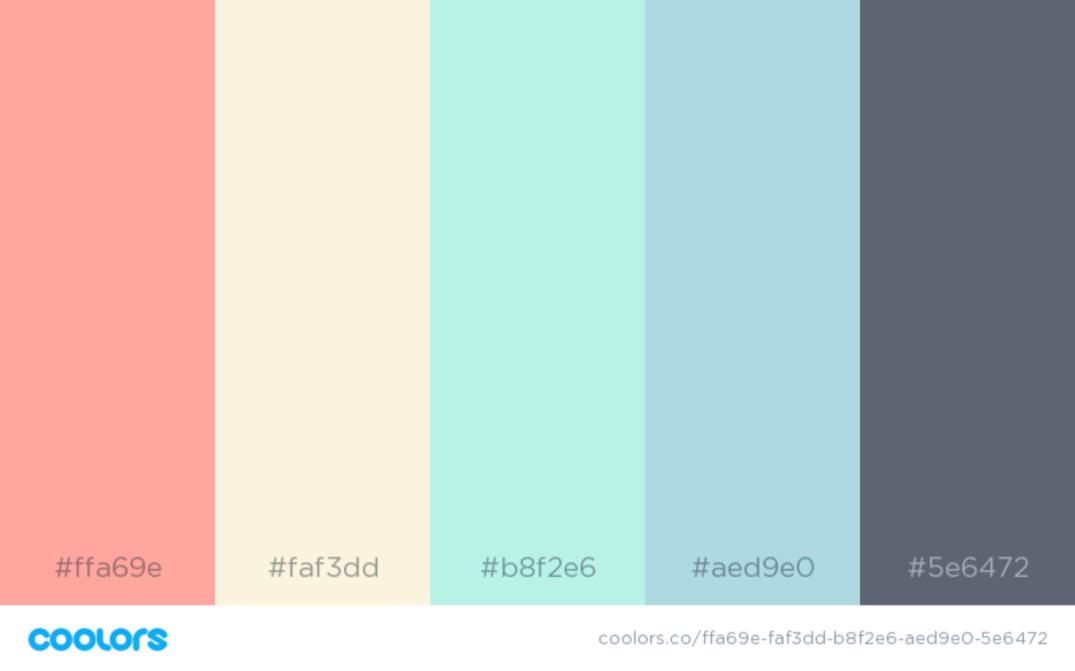
1604025390812567b48a10620e94cb7571d1bbeautiful-color-schemes-combinations-palettes-34

I like these colours as they are a mix of pastels and dark but also vibrant pinks and blues. I love the aesthetic of pinks and blues and those are the colours I am going to use in my business when I begin to create it.

When it came to choosing a font for my first business card design, I choose these two:

Screen Shot 2019-03-05 at 13.18.56Screen Shot 2019-03-05 at 13.19.37

I then decided to use a background full of cacti as I love cacti. I also used a background I took of google which was covered in different Cacti. However recently I have lost my motivation to do anything and it showed in my work and my tutor was very upset with what I had created and told me that I could do so much better, I kicked my arse into gear and decided to start from scratch. I decided to sketch up a character I had created for a friend once, scanned him into photoshop and then outlined him and coloured him. Afterwards then I placed him into Illustrator and looked for fonts to use. As the text on the characters top was handwritten I decided to find a text similar which was this:

Screen Shot 2019-03-05 at 13.20.14

For the text underneath my name then I decided to use the font I had use on my previous design Hai Eisya. I do not usually like using two different fonts however in this case I liked the way it looked.

I then coloured the back on the business in the same colour as the characters top and placed my email at the bottom in the Lemon Yellow Sun font and this is what the completed business card looks like:

To conclude I did found this project very difficult as I am not that interested in graphic design and that is why I had such low motivation to complete it, but I realised recently that in life the things you want to do don’t come to you, you have to chase after them and work hard for them. You’re not going to walk down the street one day and have someone walk up to you and ask you to do things for them, you have to get you talent noticed by putting yourself out there, and when it comes to making a film for example there are going to be things you’re not going to like, for example you can’t just go out and shoot a film, in a perfect world maybe but in this world you need to do lots of paperwork, scripts, storyboards, animatics, proposal, healthy and safety form, shot lists, location scouting lists, editing list and these are things you have to complete before you even begin filming. So I am glad I have done this work in a way as it has made me realise that do all the boring paperwork has to be done to ensure you can create your master piece and now I also have something to use to present myself as an individual and to promote what I do. Also I believe that this business card is different to the usual stereotype of a business card and will have people remember it more.
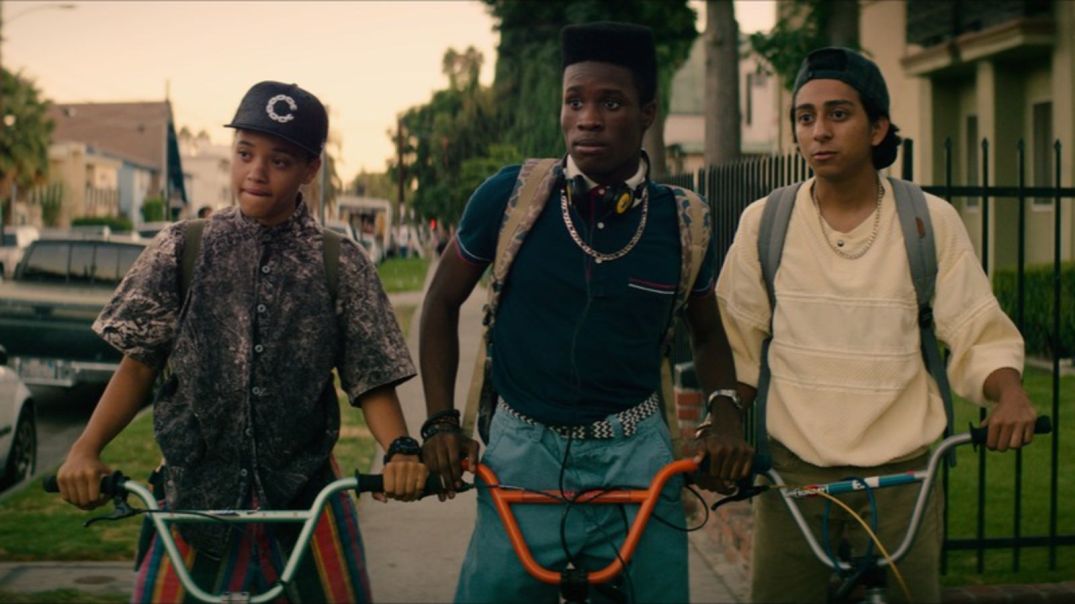
Advertisements Evaluation

Radio Advertisement:

I really liked how to the radio advertisement turned out, the audio was great, I had a lot of people laugh, people knew clearly what the advert was trying to sell however, someone did tell me that the subject matter of this Steven person having been cheated on is a bit of a rough area as they doubt that Quorn would allow an advertisement contain subject matter such as that to be aired under their name. Besides that I believe that the radio advertisement went according to plan and I am really happy with how it turned out.

Viral Advertisement:

The viral advertisement is the best out of them all, the cuts are quick and keep the viewer engaged, the information I am trying to convey is clear and is recognised by the viewers and the tag line ‘Meat Free Mondays’ is loud and clear. The visual comedy keeps the audience entertained and keeps them drawn to the advertisement however, the footage is very grainy caused by the low quality of video my camera captures at. Also it was pointed to me after showing the advert to my peers that the voice over in the beginning is unnecessary as the stomach grumbling is good enough and shows that I am hungry.

TV Advertisement:

The TV advertisement is basically the Viral advert but shorter, but that does not take anyway and of the information shown in the viral add as it is all still conveyed.


I believe that the advertisements I have created have met the brief. I conveyed the information needed, they are suitable for the targeted audience and the tag line ‘Meat Free Mondays’ is in each advertisement. For the video advertisements I believe that the footage could have looked a lot better and I wish I spent more time on the filming process because I could have chosen a better location for the shoot and would have been able to produce a much higher quality of videos. I did not manage my time well however, that was due to me preparing myself for transferring to a different course.

The strengths of my advertisements are that I portrayed the information about the Quorn meals and the Meat Free Day campaign clearly. Also I have a very humorous personality which conveys in these adverts as I purposely tried to make them funny to the audience to keep their attention and for them to remember them which will help boost Quorn as a business. When it comes to weaknesses its mostly to the quality of the footage and my time management as they did affect the outcome of the advertisements.

Here are feedback from my peers:

Harrison Walker – “In my opinion I thought the overall campaign was excellent. The production was very professional, the sound was well balanced and the camera work was very clear and work perfectly. I also love the sound effects he uses and it brings an approach that visuals would not. Well done Cerig.”

Cameron Hardman – “Very well filmed, thought out and planned. I like the quick edits and the humour of the long wait of the microwave. Camera angles worked very well and used appropriate sound effects. Does definitely fills the brief.”

Tyler Jennings – “I liked the editing a lot, it seemed very similar the the style of Edgar Wright. The sound effects you used were good especially the microwave ‘pinging’ sounds and the bit where the car drives off and comes back.”

J Thomas – ” I really like the varied amount of different camera angles and shots so it keeps the advert interesting to look at and all of the follow up shots like when your pressing a button you made a close up to emphasize the actions however, I feel that you should of had done something when in the transition of you leaving and you returning maybe just some quick shots of something else just to keep the audience interested. I like the theme and comedy that was displayed within the as well as the voice acting however, I feel that if you had added some sound effects to the advert it might make the advert feel more alive and interesting.”

Unit 5 – Task 2 Research Evaluation

Primary Research:

When it comes to primary research I have decided to create questionnaires for peers in my class as I could get their opinions on Meat free foods and If they would participate in the ‘Meat Free Day’ that Quorn is doing to promote their products. The questionnaires will help me see if a lot of people know who Quorn are as a company and their products, which will then help me in the creation of my advertisements in knowing how much information on the company I need to include.

Secondary Research:

With secondary research I have included graphs from the BBC website which show how many vegetarians and vegans there in Britain and also how much sales how grown since 2011 and how much they are predicted to grow up to 2021. I am using this as it is good information to have on how many people in the world do not actually eat food with meat in it and the growth in meat free products can be due to Quorn. Granted this is me just speculating, however Quorn is the largest proprietor of meat free products and is mostly likely the cause of the growth as they are so well known.

Sound & Acoustics

What is sound?

Sound is vibrations that travel through the air or another medium and can be heard when they reach a person’s ear.

It can travel through a variety of different materials by bouncing off the molecules inside a material. This transfers kinetic energy from one molecule to the next as the sound wave travels through the material causing the molecules inside it to vibrate.

The amplitude of a sound wave is the height of the wave which determines how powerful or strong the wave is, this translates as the volume of the sound.

The Science behind the sound?

The low bass frequencies have a much longer wavelength than the high frequency waves so can move through materials more easily.

Sound waves are longitudinal types of waves, this mean they move in line with the wave’s energy. The frequency of the sound wave is how many oscillations occur within a given time, low frequency sounds have a longer wave length and as the frequency gets higher the wave length gets shorter, frequency is also related to pitch as the higher a frequency is then the higher the pitch is.

Sound Waves

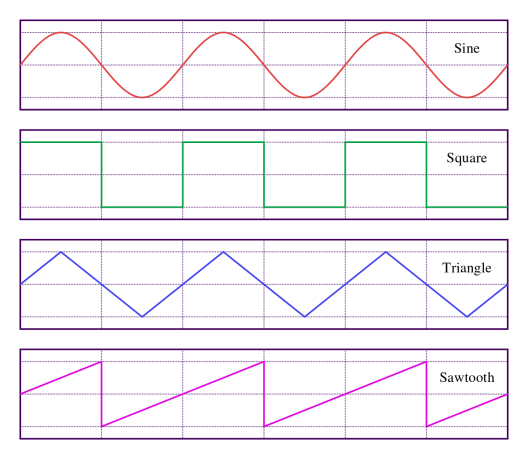
Some examples of basic wave forms are the sine wave which is a smooth repetitive oscillation, the square wave where the amplitude alternates at a steady frequency like a pulse between fixed minimum and maximum values. There is also the triangle wave which is easily recognisable due to the triangular shape of its waves and then there is the saw tooth wave form which is named because of the shape of the wave is like the teeth found on a saw, also the shape of the saw tooth wave gradually rises up then sharply drops off.

1200px-Waveforms.svg

How do we measure sound?

In acoustics we use decibels as a unit of measurement to determine the volume of sound levels relative to a 0db reference. What we are actually measuring is the sound pressure which is the deviation from atmospheric pressure caused by a sound wave which as humans we perceive as the intensity or loudness of a particular sound. When you are recording sound try to make sure you have a “hot” signal level which means you have regular audio peaks between -6db to -3db.

The SPL Decibel Scale

The SPL decibel scale is the scale used to measure the intensity of sounds. The unit this is measured in is decibels (db.) The scale ranges from 0db, which is no sound at all to 140db, which is the threshold of pain from a sound being loud.

A few examples of sound level are 40db would be the average sound in someone’s living room, 85db is the average sound of street traffic, 100db is a pneumatic drill (jackhammer) and finally on the threshold of pain at 140db is an planes jet engine at a distance of 25m.

What are acoustics?

  • A branch of physics concerned with the properties of sound.
  • The properties or qualities of a physical space that determines how sound is transmitted in it.
  • Acoustics is defined as the science that deals with the production, control, transmission, reception and effects of sound.

Most people think that acoustics is strictly musical or architectural in nature. While acoustics does include the study of musical instruments and architectural spaces, it also covers a vast range of topics, including: noise control, SONAR, ultrasound scans, seismology, bioacoustics, and electroacoustic communication.

The Relationship between Frequency and Wavelength

Frequency and Wavelength are very closely related. The higher the frequency the lower the wavelength. Because all sound waves move at the same speed, the number of wave crests that pass in one second depends on the wavelength. The frequency will also be larger for a short wavelength wave than for a long wavelength wave.

The Relationship between Frequency and Pitch

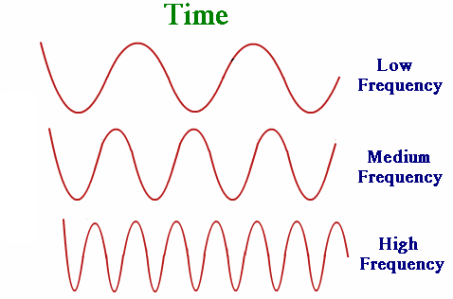
A high pitch sound corresponds to a high frequency while a low pitched sound corresponds to a low frequency. Here is a diagram for an example.

frequency1training_support_better_sound_p1_p01_3_l_en

In basic terms a high pitch has a sharper tip (closer to triangle) than a low pitch which is more rounded and the frequency is the how close each wave is to each other.

Sound Proofing

The reason why people sound proof rooms while they are recording sounds is to get pure sounding audio with no background noise such as cars driving in the streets or other people walking around and talking in other rooms. Soundproofing also prevents sound from leaving the room and bothering other people in the house or the rooms next to wherever you are recording your instruments or dialogue etc.

What is the difference between Diffusion and Absorption?

Diffusion is where something is spread around widely around an area. So when that comes to sound and sound proofing, the sound being recorded will travel through the air and into the sound proofing foam which will then spread the sound around the room you are recording instead of it being released into other rooms. Absorption on the other hand absorbs the sound being made in the room so that I can not escape into any other rooms, but it also helps for the microphone to only pick up what you want it to pick up as every other sound thats not close to the mic almost gets absorbed by the sound proofing foam.

In the recording studio in Nantgarw college campus they have soundproof boards in a few spots on the ceiling to stop the music from travelling upwards into the classrooms above, they have sound proofing foam in the corners of the room as to spread the bass evenly around the area. However, the college has a problem, the room they placed all the recording equipment in has a large air conditioning unit in the ceiling which makes a lot of noise which affects recording dialogue and certain instruments.

Microphones & Polar Patterns

What is a Ribbon Microphone:

A Ribbon Microphone is a type of microphone that uses a thin aluminium, duralumin or nanofilm of electrically conductive ribbon placed between the poles of a magnet to produce a voltage by electromagnetic induction. Ribbon microphones are primarily used for vocals and to record audio bidirectional, which means that they pick sound equally well for the front and back of the microphone.

Ribbon Microphone are better than others in a way as they produce an audio that is close to what the human ear hears. However, the microphone is very sensitive so in loud areas with very strong sounds the thin coil inside can break easily and also if it is dropped a hard surface.

What is a Condenser Microphone:

Condenser microphones are most commonly found in studios. They have a much greater frequency response than other microphones and transient response. Transient response is the ability to reproduce the ‘speed’ of an instrument or voice, they also generally have a louder output but are much more sensitive to loud sounds.

Compared to a Dynamic Microphone the Condenser has a more superior and accurate sound quality however, it is more fragile than the Dynamic Microphone.

What is a Dynamic Microphone:

Compared to the Condenser Microphone, the Dynamic Microphones are much more durable as they are resistant to moisture and get dropped or thrown onto hard surface, which makes them the best choice for if you are doing on stage performances. Unlike the Condenser microphone they do not require their own power supply however the sound quality that is produce is not as accurate.

What is a Shotgun Microphone:

Shotgun Microphones are basically just condenser microphones with an extreme directional pickup pattern mounted on rig that you hold over the actors heads to capture their dialogue. Shotgun Microphones are mainly used in the productions for films and television shows.

How a Ribbon Microphone works:

img_buyers_guide_ribbonmics_3

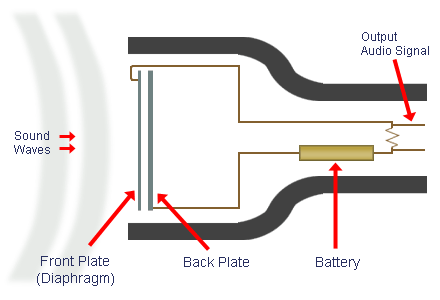
How a Condenser and Shotgun Microphone works:

mic-condenser

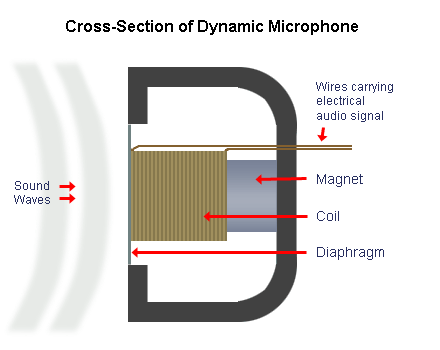
How a Dynamic Microphone works:

mic-dynamic

Practical Applications

Ribbon:

  • Recording Vocals (Singing, Dialogue.)
  • Recording Acoustic Instruments.

Condenser:

  • Foley.
  • Audio production in a studio.

Dynamic:

  • On stage performance.
  • Live concerts/gigs.

Shotgun:

  • Recording actors dialogue.


Example of Products

aea-r44c-studio-ribbon-microphone-749 AEA R44 Series Ribbon Microphone.

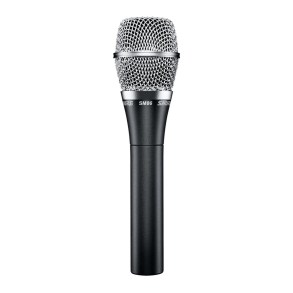
preview Shure SM86 Condenser Vocal Microphone.

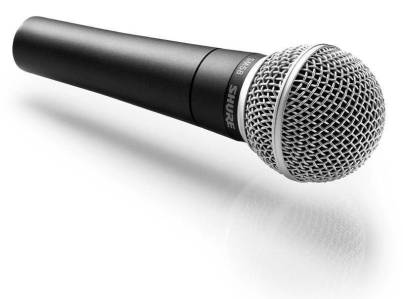
lg_SHURE+SM58+LCE Shure SM58 Dynamic Microphone.

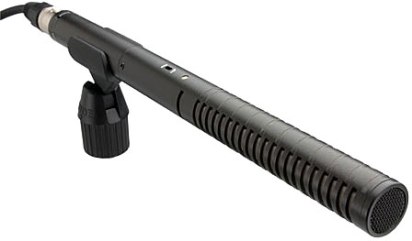
4642 Rode NTG-2 Shotgun Microphone.


The 3 Main Polar Patterns

Microphone-Polar-Pattern-Diagram-e1407027444512

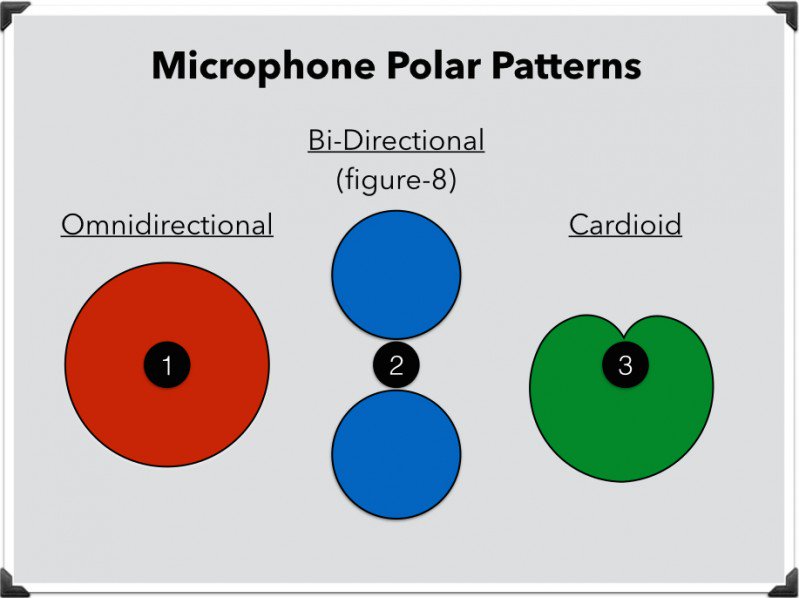
Each number is a microphone with a certain Polar Pattern.

The 1st one has an Omnidirectional polar pattern which means that the entire red are is equally sensitive to sound.

The 2nd is an Bi-Directional polar pattern (also known as a figure of 8) which is only sensitive to sound from the front and the back of the microphone.

The 3rd is a Cardioid polar pattern and it is more sensitive to sound from the front of the microphone than the sides and the back is ignored.

Practical scenarios for the Polar Patterns

Omnidirectional:

  • Ear to ear sounds
  • To record ambience

Bi-Directional

  • Singing
  • Narration
  • Dialogue

Cardioid

  • Dialogue
  • Recording Instruments.