Narrative Theory

Why analyse a narrative?

  • Stories are at the heart of our culture.
  • Understanding how a story is structured gives insight into:
    • A producer’s intentions.
    • The audience’s experiences.
    • The power of a product to influence

Theorists

  • Theorists develop ideas.
  • Narrative theorists have studied narratives in a range of cultural and media forms.
  • Identifying common patterns and similarities.
  • Feeding into wider theories about audience consumption
  • Develops thinking about creative practice.
  • Helps future producers work more effectively.

Propp plot structure

  • Preparation – The scene is set.
  • Complication – A problem occurs, some evil takes place.
  • Transference – The Hero receives help and leaves on a quest.
  • Struggle – The Hero is given tests or there is a fight or pursuit.
  • Return – The hero attains his objective and fulfils the quest.
  • Recognition – The villain is punished and the hero receives his reward.

Tzvetan Todorov’s Theory

  • Narrative is broken down into three main segments:
    • Equilibrium – There is a status quo, an established state of affairs.
    • Disequilibrium – Disruption (e.g. an event or problem or a series of these) occurs which disturbs the order.
      • There is recognition of the disruption.
      • Efforts are made to solve the problem.
    • Return to equilibrium – There is a resolution of the problem and there is once more an established state of affairs (though it may not be exactly as at the start.)

Linear and non linear narrative

A linear narrative will take place in a straight line, usually chronologically.

A non linear narrative jumps back and forth in time, using flashbacks/forwards.


Digital Footprint & Safety

When it comes to a digital footprint it really comes down to what you post on the internet and this can span from profile pictures, videos on Facebook, YouTube etc, dating profiles, tweets and statuses on Facebook. Jobs google search your name on the internet to find out what your digital footprint is like, for example they can search through your Facebook and find out if you do drugs, they can find out whether you have committed crimes in the past and more, this ultimately leads to them deciding if you are suitable for their workplace or not.

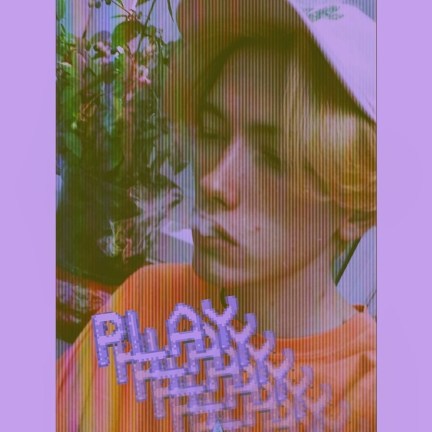
For example this is my profile picture on Facebook at the moment:

38740245_2067331793582994_3026588231433977856_n

Now I do not see this as being something that will stop me from getting a job. I am not doing drugs, I am not showing any sort of violence or abuse and there is not any nudity in the image. It is just a photograph of me with smoke from a cigarette coming out of my mouth and the image is highly styled with a very 90’s VHS aesthetic.

So I say you can post whatever you want, post what interests you enjoy outside of your professional life, post videos of you and your friends on nights out and whatever else just as long as it does not contain violent or abusive imagery, nudity and sex, drugs and anything else that would make you miss the chance of getting or even losing the one you have.

Planning a Factual Short

Revelance: The Ideas and Themes that matter to our audience.

Talkability: Compulsively shareable content that gets people talking.

Timelines: Things that impact young people’s lives here and now.

Originality: Our content can’t be derivative, only innovative.

Requirements

  • Compliance forms
  • Credits and end markers
  • Health and safety information
  • Contracts

Marketing and publicity material

Required assets:

  • A 30 to 60 second self contained clip or trailer for use on social platforms, subtitled and cut square (1080 x 1080)
  • A 15 second fast cut montage of shots and key sync that really sells the show for Instagram, subtitled and cut square (1080 x 1080)

Things to remember

  • Remember you do not have a lot of time!
  • Be ruthless when editing.
  • Consider linear and non linear narrative.
  • Research your audience.
  • Plan a realistic production schedule.


Django Unchained Scenes Analysis

Django Unchained – Opening Scene

In this scene we see Django (played by Jamie Foxx) chained up to other black slaves while slave traders are leading them to a town to be sold. Then Christoph Waltz’s character Dr King Schultz rides in and asks for one slaves, however the slave traders deny his request and aims a shotgun at him. Dr Schultz reacts to this in a calm manor by shooting one of the slave traders in the head and shoots the other slave traders horse in the head which falls onto the trader. Dr Schultz then releases Django from his shackles and tells the other slaves that they can either help the crushed trader and take him to a doctors or kill him and find a nice place to live that is not polluted by the slave trade, the slave take the second option and blow the trader to chunks with a shotgun.

In this scene you are shown the way slaves are treated by traders. Django and the other slaves are chained to each other by the ankles, only wearing raggedy trousers and holding a cloak over them to try and keep them warm in a cold night. The slave traders however are wrapped up warm in multiple layers of clothing riding on horses. Many know how slaves were treated but this does show a divide between them. For example a sheep dog leads a group of sheep into a pen in the outdoors, the sheep dog then goes inside into a nice warm house and eats a nice meal and sleeps on a comfy bedding however, the sheep must stay outside in the cold and rain trapped in a small space. This could be seen as a metaphor to how slaves are treated, and it can be seen in this scene.

Also the racial slur ‘Nigger’ with the hard R is scene and through out the film, for example when Django goes to take the coat of the dead trader his brother shouts, “Nigger, don’t you touch my brothers coat.” Even though he is trapped underneath the horse he still feels like he has his white man power so to speak.

Dr Schultz is the best thing in this scene, even though he is white you can tell he is not like the other white people and how they treat black people. During this scene he treats Django with respects and even pays for the purchase of Django with a bill of sale even though he leaves the trader for dead. The biggest thing that hits me is when he starts to write his bill of sale he just looks up at the slave in front of him, smiles and finishes off writing the bill. This shows how he believes that black people and white people are the same without him even saying a word.

Django Unchained – The Brittle Brothers

In this scene Django is on the hunt for The Brittle Brothers who are hiding out as brothers called the Shafers. Django finds them as they are about to whip a slave girl and he shoots one of them and whips the other. Then Dr Shultz shoots the other as he rides away on a horse.

In this scene we see Django’s transition from being a slave to a free man. He walks around with confidence and is wearing this bright blue suit which would only be worn by stuck up white rich people in those times.

When he sees one of the brothers in a cotton field he has a flashback from when the brittle brothers are whipping his wife and Django is there begging to take her place and this shows the harshness of slavery back then. Django is begging and pleading with logical reason why he should take her place, he even drops to his knees and in response John Brittle bends down to his level and says, “I like the way you beg boy.” This shows that even with his begging and pleading because he is black and white people are ‘superior’ that he does not care what Django does and finds it hilarious.

When Django then goes to find the other brothers he charges towards where they are and shouts John Brittle’s name. He then stands there very confidently and this shows that he is here for revenge and nothing can stop him, you can almost feel the anger that he is feeling by the way he stands there. He then un-sheathes the hidden pistol on his wrist and shoots John Brittle in the chest. While John stares at the new hole in his chest and back up at Django who then says “I like the way you die boy” which is a throw back to how John Brittle treated him. After that then Little Raj goes to pull out his gun however, Django picks up the whip that John was holding and starts to whip him with it before he can shoot him. This part of the scene is very powerful as before this we have seen the brutal power that white people have used on black people when they whip them, for example the scars on Django’s back and the flashback of his wife being whipped. However now the tables and Django is taking his revenge and he doesn’t give him a brake, even when he is down on the floor he keeps going and even whips him straight across the face. Then he stands stares at all of the black slaves staring and quietly says, “Ya’ll wanna see something.” With this line you know he is going to do something that is going to shock us, maybe not so much the audience but definitely the black people watching as he takes the gun off the floor and repeatedly shoots him and still tries too even when there are no bullets left.

After this Dr Schultz arrives on the scene and asks where Ellis Brittle is and points to him as he hightails across the field. Schultz aims his rifle and asks Django if he is sure that it is him, Django replies saying yes and Schultz asks if he is positive. Django then answers confused “I don’t know” as because he was once a black slave he never went to an education so he only knows simple english, so when he is asked if he is positive he doesn’t understand the term and this shows as well how black people had a worse childhood than white people. They had no education, no one to tell them how the world worked, all they knew was that white men were apparently superior to them and that they had to work and work and nothing more.


So in conclusion this film is a great example of the slave trade and also how black people were treated. We see Django rise from being a mere slave to a free man who has money, a horse and can do what he wants like a white man and even speaks like them as he has been taught words and phrases from Dr Schultz. Dr Schultz is also a great character as he can be seen as a beacon of hope as he is a white man who does not like the slave trade and treats black people equal to white people. Django’s character also in a way shows that white people aren’t superior to black as all the way during the film, he makes people believe he is truly free, he is not a man who can be pushed about, he gains the trust of the highest power in the slave business Mr Candy, he tricks a couple of slavers to release him and give him a gun and then completely destroys Candyland and all its residents single handed.
Welsh Film Industry & Career Choices

Wales has been a large contributing country to the TV and Film industry because of our wonderful landscapes, its not just that though we also have a few world class studios and a history of producing television shows that appeal to a large variety of audiences for example Doctor Who which is the longest-running science fiction television show.

There are 53,000 people who are employed in the creative industries in wales however there are many skills gaps. For example there are skill gaps in the Welsh Language, technical skills, sales and marketing and especially in VFX.

The career paths I have chosen are:

  • Film Director
  • Camera Operator
  • Screen Writer

Film Director

A Director is the main body of any film or television show. The Directors work very closely with producers and the screenwriters to make someones idea and dream have a visual representation. Directors needs to understand the significance of scenes and how to shoot them. Directors also have the power to change the structure of a scene or even make a directors version of the script to change the pace or to create dramatic tension. The directors version of the script is also what all crew members work off of. Directors are responsible for both the creative and technical aspects of the production where they work to the projects budget, keeping the production under control and creating a safe and creative environment for the crew and actors.

Skills needed to be a director:

  • Ability to form ideas and to think visually.
  • Ability to create a clear and creative style for the production.
  • Great attention to detail.
  • Very methodical and calm when it comes to working in a high stress environment.
  • Knowledge with the entire production process.
  • Excellent verbal and written communication skills.
  • Able to lead and motivate their actors and crew.
  • They must have initiative and problem-solving.
  • Able to see the broader picture and meaning.
  • Ability to have diplomacy and sensitivity when it comes to working with writers, producers, actors and crew members.
  • Knowledge of health and safety procedures.

Camera Operator

Camera Operators follow the DoP (Director of Photography) and the Director with shot compositions and they are responsible for all the aspects of camera operation and the preparation for the shoot. Its important for camera operators to keep watching and analysing new Television shows and Films to keep up to date with trends and styles of the modern media. Also many camera operators will develop additional skills such as using a steadicam, aerial shots and underwater experience to improve employ ability.

The skills needed to be a camera operator are:

  • Need to have an artistic vision.
  • Strong creativity and attention to detail.
  • Have an eye when it comes to colour and lighting.
  • Good technical knowledge of digital processes and camera equipment.
  • Knowledge of photography, painting and of moving image.
  • Physical coordination and strength.
  • Having the ability to accept and give direction.
  • Excellent communication skills.
  • Knowledge of relevant health and safety procedures.

Screenwriter or Scriptwriter

Screenwriters provide a blueprint which the producers, director, production designers, composers and editors, cast and crew use to make an idea be able to turn into a visual and where a reader can see it cinematically. The screenplay does not only have fascinating characters it must also have an exciting plot with a great premise for a marketable film however, it must have logical principles and a dramatic construction, as well as a industry format and style. Screenwriters must produce a highly creative screenplay with originality.

Skills a Screenwriter/Scriptwriter needs:

  • A strong understanding of film narrative, and knowledge of different audiences tastes and trends from the past and future.
  • A passion for cinema and film making.
  • Ability to search out new types of talent and creative relationships.
  • Excellent all-round communication skills.
  • Able to sort out story problems using creativity, discretion and great flexibility.
  • Keen insight into all aspects of screenplay tones, genre, style, structure, character, plot, action and dialogue.
  • An understanding of development for example log lines, premises, synopses, beat outlines, step outlines, treatments and rough drafts.
  • A strong understanding of how to use dramatist’s tools such as comic irony, suspense, mystery and dramatic tension.

When it comes to choosing only one career path I find it very difficult to do that. The reason why that is comes from me being used to doing everything when I have created short films in the past, I created the scripts and storyboards, I directed the production, acted in some of them and then did all the post production and posted them on my YouTube channel. Originally I wanted to be an actor but then I grew a strong passion in photography and creating short films and animations and my dream of becoming an actor faded away and I wanted to ‘make my own films’ however, before I joined this course I did not realise how hard it really is to make your own films yourself. Really I’d primarily want to be an auteur, for example Quentin Tarantino the creator of amazing films such as Kill Bill, Pulp Fiction, Django Unchained, Reservoir Dogs and many more is not just the director, he writes the scripts, directs the actors, probably operates the camera and he also acts in a few and that is what I hopefully will do but I do understand it is very rare to have that chance.

So when it comes to figuring out what career path I want to do I would say that I would choose being a director however when it comes to university I have an idea. My idea is to study in a directing course for how many years, then after that study on a course for script writing, then camera operating and finally post production editing. Now I understand that doing that will have me be in university for 6 years or even more, but I believe that doing that will give me more of a chance at getting more jobs and starting a career as an auteur like I want to and have full creative control of films I want to make. Granted I will not be able to be an auteur straight after I have finished college and I will have to publish my own scripts to producers, directing someone else’s film idea or be an editor for someones production, but doing that will allow me to progress in reaching my goal and getting the career I want.

Academic Writing

What is Academic Writing?

  • Academic writing is one way in which you will demonstrate your knowledge.
  • Research shows that effective writing skills are related to better grades and greater academic achievement.

Section A: Understanding the assignment.

  • The first step in the beginning any assignment is to make sure you understand the assignment instructions.
  • Your tutor has developed the assignment so that they will be able to assess your understanding of the course material and give you an appropriate grade.
  • As you re-read the assignment instructions, ask yourself, “How does the assignment fit into the course?” “Which course of unit objective(s) is the assignment linked to?” “What do I need focus on?”

Section B: Organising your ideas and drafting.

  • Generating Ideas
  • How you come up with idea for your writing assignment will vary from assignment to assignment and unit to unit. The main thing is to get down your ideas. This will help you:
  • Work out what you need to find out and refer back to the question/topic
  • Formulate questions that you will be able to answer through your reading
  • Focus your reading
  • Develop a rough idea of what the structure of your essay might be like
  • A first draft does not have to be perfect, and you do not have to draft the sections of your paper in order.
  • You may need to go back and re-read the assignment instructions or do further research. Drafting also includes properly citing in-text quotations from your research sources and preparing your reference pages.

Section C: Revising and proofreading.

  • The process of revising involves evaluating your draft’s content and organisation and then rewriting your paper to be more clear and concise.
  • You may need to return to earlier steps, such as planning and organising, to achieve this goal.
  • Once you are satisfied with your revision, take the time to proofread your essay. Check your grammar and spelling.


Essay/Extended Writing Structure

  • Introduction
  • Question to be answered
  • Discussion
  • Analysis
  • Evaluation

Key Terms

Analyse = Focus on the ‘how’ and ‘why’ of an issue or topic. Do not simply describe.

Discuss = Present a point of view after considering both sides of an issue or question. Your opinion should be supported by arguments and evidence.

Evaluate = Consider both strengths and weaknesses and make a judgement.

Spelling, Punctuation and Grammar

  • Apostrophes
  • Commas
  • They’re/their/there
  • Films need the date in (brackets) next to them, e.g Shrek (2001)


Sound Design

I was tasked with choosing out of 3 scenes from 3 different movies (Lord of the Rings, Matrix Reloaded and Star Wars Rogue One) and remove the original audio from the scene and find multiple sound effects to add in and re create the audio for the scene ourselves. I chose to use the scene from The Lord of the Rings as in all honesty I thought it would be easier to do because of how easy it would be to find the sound effects instead of having to find sound effects for Star Wars as an example. However I wish I did use Star Wars a Rogue One as my choice of scene as I could have used more creativity in my choice of sound effects.

The Process

Before I even began editing I watched the original scene over a few times to find what sounds were needed for example the rain and thunder, orc’s roaring, marching, baby crying and many more, I got all of the sounds I used from freesound.org.

After downloading a variety of sounds I opened up Premiere Pro, imported the Lord of the Rings scene and the sound effects. I added the lord of the rings clip into the timeline where I then deleted the original audio and started to add the sound effects I had downloaded.

How I added the certain sounds at the right moments was really just down to certain things happening in the scene, lip syncing and just creative decision.

During the production I used sounds such as

  • Thunder (For the lightning.)
  • Rain (Self explanatory.)
  • Footsteps (For the orcs marching towards the castle walls.)
  • Creature growls and roars (I used these sounds for the orcs but also combined the sounds to make them more orc like.)
  • A loud thud/bang (I used this sound to create the noise of the orcs banging their spears and feet on the ground.)
  • Metal clanging (This sound was for the orc who was smashing his arm against his armour.)
  • Baby crying (I used this sound for the baby crying in the background.)
  • Fire (This fire was used  in the same scene I used the baby crying as there is a fire lighting the scene.)

Mood and Meaning

Some of my sounds created a mood and depth to the scene. For example the footsteps created a sense of impending doom especially when you can hear it from a far as we can see the elves staring at the Orcs. Also with the pounding on the floor creates a sense of strong tension and rises as the pace of it rises and the Orcs snarl.

Diegetic and Non – Diegetic

Diegestic sounds are sounds where the sources of the sounds are visible on the screen and are sometimes implied to be in the present action showed. Examples of Diegestic sounds are:

  • Character Voices.
  • Sounds made by objects in the story.
  • Music represented as coming from instruments in the story space.

Diegetic sound can either be on screen or off screen depending on whatever the source is and that is within the frame or outside of it.

Diegetic sound is also known as “Actual Sound.”

Non – Diegetic sound however is where the sounds used are not visible on screen or implied in the action present. These sounds consists of:

  • Narrators commentary.
  • Sound effects which is added for the dramatic effect.
  • Mood Music.

The sounds are seen as coming from outside of the story space.

Another term for Non – Diegetic sounds are “Commentary Sounds.”

When it comes to ‘did my sounds enhance the visuals’ I can only answer it by saying that why does anyone add sounds into scenes. Sound brings a scene to life by making you believe that what you are watching is real in a sense. For example, the scene is in a park and there is a beautiful with birds singing and a couple sitting in a park, however there is a very busy street behind the camera. So during the editing they remove the audio clip and add in birds chirping, gentle stream of water, a gentle breeze and people quietly talking in the distance to make the scene more peaceful and relaxed than if you kept in the sounds of cars speeding behind the camera. Another example can be with a punch, actors can not actually hit other actors so they combine different sounds to make the audience feel how strong the hit is and have a sense of how it hurts. So to answer the question does the sounds I used enhance the visuals? Yes all sounds do.

During this production I improved on timing sounds and ‘following the beat’ so to speak and in general I feel that I have improved in sound design and have a greater appreciation for it as it is a difficult thing to do.

I did miss out some sounds, for example when Aragorn draws his sword out of his sheathe I did add a sound effect which corresponded with him unsheathing his sword. Also again like I said before I wish I did Star Wars instead as I would have been able to use more creativity in my work and test myself on what I could create.

Final Video:

https://vimeo.com/294349638

Camera Settings

Aperture

The aperture is a ring inside of the lens which is used to measure how much light enters and hits the sensor to make the image bright or dark. Aperture goes by a thing called F stop, F Stop is just a name to show the measurement of how much light is going through the camera. F/2 – F/4.5 is used mainly for portrait photos as it creates a shallow focus and has a small depth of field. With F/8 or higher the blur is much less and these F stops are used mostly for landscape photos.

Shutter Speed

Shutter speed is how long the shutter covering the sensor for is open for. Having a fast shutter speed causes things to stay in place like an arm moving or a waterfall, however with a slow shutter speed things become blurred that move.

ISO

ISO is used to add more light into your shot or darken it. ISO 100 is the darkest ISO and also creates no noise however, once you reach 400 ISO – 800 ISO the noise/grain becomes more prominent.

Referencing & Plagiarism

What is Plagiarism?

  • To steal and pass off (the ideas or words of another as one’s own.
  • To use (another’s production) without crediting the source.
  • To commit literary theft.
  • To present as new and original idea or product derived from an existing source.

Sources of Infromation

  • Books.
  • Journals.
  • Magazines.
  • Tweets/Facebook posts/Reddit comments/Instagram feeds.
  • YouTube Videos.
  • TV Programmes/Films.
  • Interviews.

What it should look like

As defined by plagiarism.com, plagiarism is:

  • To steal and pass off (the ideas or words of another as one’s own.
  • To use (another’s production) without crediting the source.
  • To commit literary theft.
  • To present as new and original idea or product derived from an existing source.

Turnitin. (2017). What is plagiarism? . Available: https://www.plagiarism.org/article/what-is-plagiarism. Last accessed 28th September 2018.

Music, Images and Video

  • Using an image, video or piece of music in a work you have produced without receiving proper permisssion or providing appropriate citation is plagiarism.

Examples:

  • Copying media from other websites then paste them into your own papers or websites.
  • Making a video using footage from others’ videos or using copyrighted music as part of the soundtrack.
  • Performing another person’s copyrighted music (i.e., playing a cover).
  • Composing a piece of music that borrows heavily from another composition.

Plagiarism Detection

  • Turnitin
  • Knowing a students writing level/language used
  • Recognising a source


What are the copyright laws and examples of cases where it has been used.

This was taken from the UKCS (The UK Copyright Service) in their Fact Sheet P-01: UK Copyright Law. You can find the page using this link: https://www.copyrightservice.co.uk/copyright/p01_uk_copyright_law

I found this under the ‘Restricted Acts’ section:

“It is an offence to perform any of the following acts without the consent of the owner:

  • Copy the work.
  • Rent, lend or issue copies of the work to the public.
  • Perform, broadcast or show the work in public.
  • Adapt the work.

The author of a work, or a director of a film may also have certain moral right:

  • The right to be identified as the author.
  • Right to object to derogatory treatment.”

I also found the duration of a copyright from the same website and page under ‘Duration of Copyright’ and this is what it says:

“Duration of copyright

The 1988 Copyright, Designs and Patents Act states the duration of copyright as;

  1. For literary, dramatic, musical or artistic works

    70 years from the end of the calendar year in which the last remaining author of the work dies.*

    If the author is unknown, copyright will last for 70 years from end of the calendar year in which the work was created, although if it is made available to the public during that time, (by publication, authorised performance, broadcast, exhibition, etc.), then the duration will be 70 years from the end of the year that the work was first made available.

  2. Sound Recordings

    50 years from the end of the calendar year in which the work was created, or,

    if the work is released within that time: 70 years from the end of the calendar year in which the work was first released.

  3. Films

    70 years from the end of the calendar year in which the last principal director, author or composer dies.*

    If the work is of unknown authorship: 70 years from end of the calendar year of creation, or if made available to the public in that time, 70 years from the end of the year the film was first made available.

  4. Typographical arrangement of published editions

    25 years from the end of the calendar year in which the work was first published.

  5. Broadcasts and cable programmes

    50 years from the end of the calendar year in which the broadcast was made.

  6. Crown CopyrightCrown copyright will exist in works made by an officer of the Crown, this includes items such as legislation and documents and reports produced by government bodies.Crown Copyright will last for a period of 125 years from the end of the calendar year in which the work was made.

    If the work was commercially published within 75 years of the end of the calendar year in which it was made, Crown copyright will last for 50 years from the end of the calendar year in which it was published.

  7. Parliamentary CopyrightParliamentary Copyright will apply to work that is made by or under the direction or control of the House of Commons or the House of Lords and will last until 50 years from the end of the calendar year in which the work was made.”

Examples of Plagiarism:

Johnny Cash released a song in 1955 called “Folsom Prison Blues” about a convicted prisoner who was tortured by the sound of a train passing his prison however, he lifted the melody and a few of the lyrics from a song called “Crescent City Blues” by Gordon Jenkins which was released in 1953 two years before Johnny Cash’s song. The plagiarism then went into a lawsuit which was settled from a $75,000 payment.


When you are referencing you will need:

  • Name of the author(s)
  • Year Published
  • Title
  • City published
  • Publisher
  • Pages used (for books) or timestamps for films


Hiroshima and Nagasaki Stills Video

https://vimeo.com/291701273

I created this video about the nuclear bombings on Hiroshima and Nagasaki using stills found on Google and then I converted clips off YouTube for the audio clips used in the background.

I am really happy with how the final piece came along however, I would have liked to have more images to work with as I would have been able to make the pacing much better than it is the only problem is that there were not a lot of options to use on Google Images as I was in need of specific images from a specific year.