Skilled Working Class Research & Pitch

A skilled worker is a worker who has a certain/special skill, knowledge training in their work. These Jobs consist of Police Officers, Soldiers, Paramedics, Physicians etc.

Film Pitch for Soldiers: Saving Sergeant Bill

Actors:

Nicholas Cage – Sergeant Bill (Plot Character)

Matt Damon – Corporal Rees (Main Protagonist)

Tom Cruise – Iraq War Lord (Main Villain)

Nicholas Cage’s character Sergeant Bill leads his platoon with Matt Damon’s character Corporal Rees through the Iraq deserts when they are suddenly ambushed by the Iraq War Lord played by Tom Cruise and his henchmen. Corporal Rees is left stranded and injured believed to be dead while Sergeant Bill is taken hostage by the Iraq War Lord and taken to his War Camp to be tortured. Now Corporal Rees armed with only a pistol and a toothbrush, he must infiltrate the Iraq War Camp alone, seek revenge by killing the War Lord and saving his love interest, Sergeant Bill from his fate.

The film will be shown on Channel 4 from 9pm to 10pm as skilled workers work 30 hours a week, usually 8 hours a day and that would be from 7am to 4pm.

Research of a popular TV Show

In this I will be researching the target audience for a Television show and what are the audiences interests, how do they typically consume media products and what kind of research did I undertake in order to find out this information.

Dick Spanner P.I. (1986 – 87)

SPANNER_FINAL

Dick Spanner P.I. was a British stop-motion animated adult comedy series which parodied Chandleresque detective shows.

Dick Spanner P.I. target audience was typically aimed towards men from the ages 30+ as some of the puns and visual gags used in the show are more understood by an older audience however, when I watched the show on DVD I understood the references and puns as I was raised with the media products and by an older generation.

The show was created by Gerry Anderson who created shows such as Thunderbirds, Captain Scarlet and the Mysterons, Stingray and Fireball XL5. This was his last Puppet stop-motion television show and as all of his past shows were aimed towards children I am guessing when it came to Dick Spanner he decided to change his ways and make something more towards the adult audience.

The types of people who would of watched this show would have been fans of stop-motion animation, detective shows of the past with narration over them, and enjoy humorous puns such as this for example. In the first episode of “The Case of The Maltese Parrot” a man is exploded out of the floor of his hotel and lands on the pavement in front of Dick Spanner. His body is smoking from the explosion and Dick Spanner says: “The guy was smoking, that could ruin his health.” So with that you can understand that the humour is very dependant on taste.

Editing of the Past

Before editing as we know it was around movies were filmed just like theatre where they just filmed it in one long take while telling an entire story.

Sick Kitten which was released in 1903 is an example of ‘In Camera Editing’ where they would film a scene then they would stop the film, move in closer for a close up or change the angle then continue rolling the film.

George Melies short called The Vanishing Lady was the first film to use the jump cut and he uses it as a special effect to make the female actor in it appear to disappear.

In his film ‘The Impossible Voyage’ he used multiple ways to add special effects and way of cutting between scenes by:

One exposure over another.

Painting as backgrounds.

Pictures/art placed and hanged on strings.

Models used as smaller versions of their larger counterparts.

Stage props.


Edwin S Porter created the film ‘The Great Train Robbery’ which is seen by many as being the first genre film however, it did copy George Melies in a way that he used the jump cut in a similar way and used the use of colouring frames in the same way as George did.


Battleship Potempkin – Odessa Steps Scene: This scene was the main influence into the popularity of the editing technique know as montage. Montage is usually used in YouTube videos these days but is used in films to show the passing of time, however in the Odessa Steps scene Eisenstein used the montage in a completely different way, using it to quickly move from different points in a scene, for example when he uses it to jump back and forth between the soldiers marching down the steps to the mother standing by her pram.

Lighting Techniques

Here I will be showing you a few examples of lighting techniques with photographs taken by me and my group members to give a visual example to the lighting techniques.

42085298_245664842798394_5996799949046546432_n

In this photograph we placed the bottle of water at the edge of the table and held a torch underneath the bottle to give the effect that the bottle is glowing. This lighting technique is know a under lighting.

42059528_262971897662790_5479481214236622848_n

We have a Key light or the left of the image which can be seen as the hat and glue is much brighter on their left sides. On the right then we used a softer orange coloured fill light to make the image warmer and to white balance the blue colour that was coming off the key light. In total we used two lights, a Key Light on the left and a Fill Light on the right.

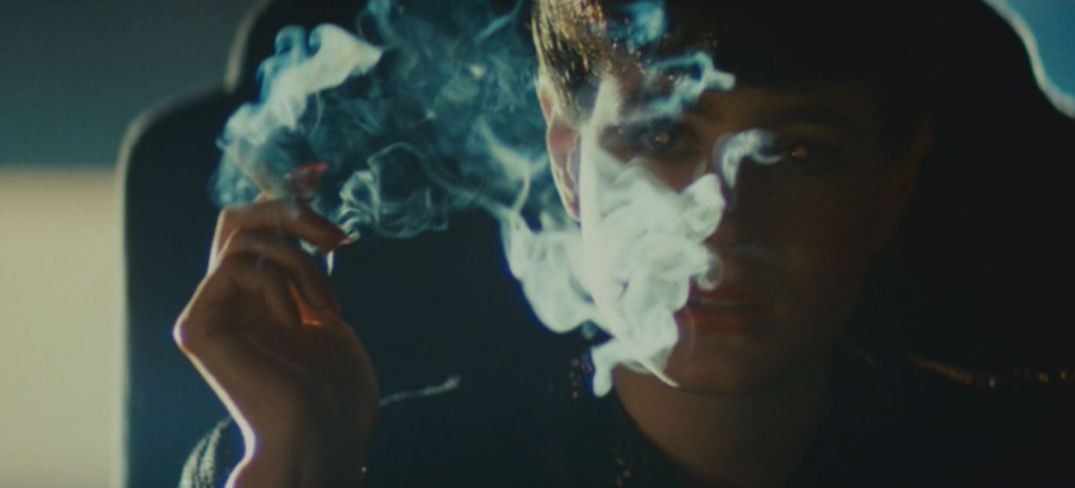
Blade-Runner-9

I want to use an example from a popular film. This was taken from the 1982 film Blade Runner. In this they have used the (what I know it by anyway) clock method where the camera is fixed as being on 6 o’clock and the light is placed on another time frame for example they have used it here on 10 o’clock, this method is used to help pin point where the light should be and to help give crew members a way to know where to place the light. Back on topic the light is placed at 10 o’clock which gives a half shadow but pulled back slightly to brighten the side of the actors face. They have also had a very soft and faint fill light on the right to make it that her face wasn’t completely blacked out but to still make her mysterious and to make the audience wonder who she is like Deckard the character played by Harrison Ford is trying to find out. This light technique also allowed them to create the red pupil that this film was famous for with the Replicants.