Documentary Filmmaking
A documentary film is a non fictional motion picture which is made to infrom, educate, instruct, and or maintain historical record. Documentary films are continually evolving with seemingly no boundaries on the content and subject matter shown in them, although most documentaries out there in last 2 years have mainly followed murder cases, unsolved crimes, and/or celebrity killers.
Originally, Docs were called “Actuality Films” and were only 1 minute or less in runtime, however over time documentaries have grown not only in length, with most being over 1 hour long, but also having more catergories such as Biographical, Sports, Music, Expose, a ‘Making of’ and many more. Documentaries were made to be educational, observational and informative, with them often being used in schools, colleges and universities, as a resource to help teach the students various principles, and to this day are still used with major success.
Social Media platforms such as YouTube, Facebook and Instagram have made it easier for the genre of documentary film to become more accessible and grow in general, allowing it to enhance the ability of educating more people, not just students, or even filmmakers, but anyone interested in the subjects told, or just into documentaries themselves. YouTube is the best social media platform for documentaries as there is 3.25 billion hours of videos watched every month, and the number of videos watched on mobile are 1 billion.
When I complete the documentary and after the exhibition has been held, I will be uploading it to my ‘Peyote’ YouTube channel as YouTube is the most well known and popular site for uploading any sort of video (within their guidelines) and I believe my video will gain more exposure on the channel, I will also be uploading it onto my website after it has been uploaded onto YouTube.
The first film documentary ever created was made in 1922 by Robert J. Flaherty who directed it, wrote the screenplay and produced the entire film. This silent film is called ‘Nanook of the North’ and it follows an indigenous inuit family as they survive in the cold, but goregous northern Quebec region of Canada. With a run time of just over an hour, it follows the Inuit people over a year as it depicts the rough conditions they dealt with, how they hunted for fish in the frozen waters, why and how they built their infamous igloos and also shows off the beautiful, yet often battering, frozen landscapes of the ‘Great White North’.
Sadly after further research I had found that the film was basically a fake, as a lot of scenes, for example the walrus hunt should not have happened as the inuits had stopped and not hunted walruses for a long time, and when it did come to time film it, while the family struggled to drag the mamal in land, one of the Inuits asked Flaherty to shoot the animal with his rifle, however he pretended not to hear and just continued filming. He also made a fake igloo set for times when they were sleeping, as it was too dark to film inside and actual igloo. Flaherty’s reason for this was to show the audience how the Inuits lived previously, and also due to the limitations of cameras and equipment back then, he had to fake a lot of the scenes in the film to get the scenes and feeling he needed. I understand why he did this and have no complaints saying that the film ‘does not’ tell the truth as even though, at the time, some of the things shown were not what the Inuit people participate in anymore, they used to and he is trying to show that to the world, also mostly everything else shown was real and factual.
Documentary Directors
There are many documentary directors out there in the world, with some being known for their style of directing, and creating documentaries, and others being known for only their work, and sometimes not even being known as the director. There are a handful of directors that have either been the ones responsible for peaking my interest in creating documentaries, I have watched some of their work or have wanted to, and they are:
- Louis Theroux
- Martin Scorsese
- Chris Smith
Louis Theroux
Louis Theroux is the main influence to my growing interest into documentary filmmaking. He is a British/American director, born originally in Singapore, he lived in London for many years, until he graduate from Oxford, where he then moved to United States, there he became a journalist for the Metro Silicon Valley and Spy. Later he moved in television where he was a presenter for certain segments in Michael Moore’s TV nation series, because of this he was then able to make his first documentary series and others through the BBC called ‘Louis Theroux’s Weird Weekends’, ‘When Louis Met…’ and many BBC two specials such as:
- Louis Theroux and the Brothel
- Louis and the Nazis
- Louis Theroux: Gambling in Las Vegas
- The Most Hated Family in America
- Louis Theroux: Under the Knife
- Louis Theroux: Behind Bars
Louis has made almost 80 documentaries which is a large feet in documentary standards, not the highest, but respected in the community. His documentaries mainly fall in the biographical genre as they always follow a person or group of people through their lives. He is very respectful when it comes to interviewing, people see him as being very gentle and harmless, which I believe is one of the reasons why he’ll get all the answers he needs. People get so comfortable around him because he is so lovely to be around that if you’re trying to hide something, you may end up spilling your secrets to him without even realising, and if you don’t, Louis is a very intelligent man, he can tell what you’re hiding and has done thorough research before on everyone he interviews. I feel that I am the same when it comes to people trusting me as I’m always that person people always drop their life stories on and don’t feel uncomfortable when talking to me. I feel its because of the same reason people are comfortable with talking to Louis about things, because they find me harmless and gentle, someone who they can rely on etc.
Louis also talks a lot to his interviewees and is very hands on and involved with the people/groups in his documentaries, I would like to do the same, however I am not a very confident person when it comes to speaking on camera and my voice in general which hinders my work as I won’t be involved as much like Louis is in his. Sometimes this is a good thing, as some people prefer when the interviewer is never involved, its just the interviewees telling their stories, with cuts to B-Roll and establishing shots. I will try and incorperate myself into the documentary, however I will not be visible, I will only be talking to the members as I ask them questions, have them elaborate more, or give them my own opinions and their feelings of them etc.
Martin Scorsese
Now I do not know much about Martin Scorsese, other than his film work, such greats as Goodfellas, Taxi Driver, The Wolf of Wall Street, Raging Bull, Shutter Island and Shark Tale. I did not know Scorsese had even participated in documentary filmmaking until my close friend, Tom Harvey, introduced me to a little documentary called ‘Italianamerican’.
Italianamerican, released in 1974, was Scorsese’s first documentary which follow his mother and his father, in the couples home, as they discuss their origins in italy, their life after the war and their ancestors and extended family. The documentary includes discussion on immigration to america, poverty and religious beliefs and the hardships they endured. The documentary is very close up and hand held which gives it a home video feel which adds to the emotion of the piece as it follows a family, and the dialogue is not heavily scripted or edited as most documentaries are these days, which is something I appreciate as it gives the video a more natural feel, allowing the audience to connect me than just be viewers. Scorsese probably asked questions such as “What was it like in homes compared to today” and his parents would ramble on about washing, food, the streets and go on and on as if it was a normal family conversation, ignoring the cameras, which makes the audience feel like they are the cameras, sitting in on the converstation, solidifying the natural feel.
This is the type of feeling and style I want with my documentary, with modern stationary, wide shots to hold onto new generation of viewers, as these days most people would not like this sort of documentary as it has not stylised text, flashy transitions or obvious changes into subject matter. Most people these days can’t think for themselves, and need to be shown whats going on, and I want people to be able to understand and follow whats being talked about whilst also having the style and movement that is seen in Italianamerican. This is a great documentary which fan of documentaries should watch if they are bored with the same, highly stylised, hollywood budget stuff that is being thrown out their like clockwork these days.
Chris Smith
Chris Smith is an American filmmaker, well known today for his Netflix documentary ‘Tiger King’ who was born in 1999 and has created over 10 documentaries in the last 2 decades such as:
- Fyre
- Tiger King
- The Disappearance of Madeleine McCann
- Jim & Andy: The Great Beyond
Fyre, which is a Netflix original film, was the first piece of work I had seen of Smith, it follows the story of the infamous Fyre Festival, from its promising beginning to its horrendous ending. The chaos of the Fyre Festival was widley reported and known around May of 2017, however I had heard nothing about it, so when I found this documentary on Netflix, my fresh eyes were interested in the story that was about to unfold. Chris is a great director from what I have seen, but where his work shines is with the editing and cinematography and I believe Chris is someone with strong knowledge in camera work and editing himself and that is how he can achieve the style and professional look his film and series have.
Everyone in the interviews of the ‘Fyre’ documentary and his most recent documentary series ‘Tiger King: Murder,Mayhem and Madness’ are shot in wide, allowing the audience to see the interviewees body movements and language, whilst also cutting in closer, to see emotion of their faces and dramatic effect. His backgrounds, landscape shots, and all around cinematography is stunning, with none of the shots shown not having something to do with what is being disscussed or talked about at the time or to do with the subject matter all together. Smith’s B roll tell the story along side the interviews, they are just there as fillers, to give more to look at and to extend time, but to give more information, emotion and connection to the viewer, which is something I will strive for in my documentary.
After researching into these directors and their work, I have decided that my documentary will take inspiration from both the style of Chris Smith’s work and Scorsese’s ‘Italianamerican’. Due to Aberdare being a small town, with many of its population knowning one another outside of family, I will want the piece to feel homely and relaxed like is seen in Italianamerican, and because the members of the band themselves are like a family, and are very relaxed and welcome anyone. The piece will also be stylised like Smith’s work to draw in the modern generation of documentary viewers, but primarily to show the colourful and wacky nature of the band, the town of aberdare and its inhabitants.
Music Documentaries
Music documentaries as usually biographical and follow a single person, group of artists and/or bands. Examples of these are:
- Oasis: Supersonic
- Amy
- Anvil: The Story of Anvil
- Bob Dylan: Dont Look Back
Music documentaries go through the artists life from the very begining, from when they were born, how they were from a young age, their school life, how they got into music and their path to fame. If they have died, or have some sort of contraversy surrounding them etc, that will then be the main point of the documentary and will span from the middle to the end usually. Like biographical documentaries, music documentaires usually have guests and interviewees who are family, close friends or other artists to tell their side of the artists or bands life.
When it comes to my documentary, as the members are all alive and well, I will be interviewing them and have them tell me their story and how they have come to be. However I am thinking of interviewing my grandparents and my mother as the drummer of the band is my uncle so they could give me some information of how he was growing up and his progression with music. However, I am not sure whether I should as I do not know how I am supposed to get in contact and interview the other members families, so at this moment and I am not sure if I will be interviewing family members or not.
Video Communication Applications (Video Calls)
Video Confrence Software, allows you to make video calls over the internet with one other person or a group of people, the size of the group may depend on how many people the application allows in one group at a time. The most popular application as this time is something that has only grown in popularity since the outbreak of the coronavirus called Zoom, however there are many other well known video call software such as the Video Call feature seen in Facebook’s ‘Messenger’ application, the famous Skype which was released in 2003 and is probably the most well known video call application in the world.
Facebook Video Call
Facebook has a feature on their browser form and their popular ‘Messenger’ application on iPhone, Androids, Tablets where you can video call one your friends through the chat feature, or if you have a group of friends you would like to talk to, create a group chat and the video call function will be there, allowing you to contact up to 50 people with their new ‘Messenger Rooms’ feature, most likely created to beat Zoom in its popularitiy and daily users
Skype
Skype is one of the oldest but also the most known video calling application. Many people believed that FaceTime by Apple was the first application to allow calls over the internet where you could see one anothers face using the camera on your computer or phone etc, however FaceTime was released sometime in 2011, and Skype was released in 2003 making it the first application to impliment the video call feature which in todays age has become a requirement in mostly all social applications.
Zoom
I have not heard about Zoom or even thought about using it until this pandemic began. Zoom was released to the public on the 21st of April 2011, however has only now gained traction and popularity due to the lockdown set in place around the world by the virus outbreak. This application has allowed Schools, Colleges and Universities to do online classes from home with it allowing 100 people to be in one call at once, with an additonal 400 if you want to pay.
Discord
Discord is mainly popular with the gaming community and is not well known outside of that. It was created to allow gamers on desktop to have a place where they could chat with friends whilst being able to play video games like the ‘Party Chat’ feature on consoles such as Xbox and Playstation. It allows users to create servers where peopl with a link or an invite can join and move into different chat rooms in the server with different features or subject matter. For example (if the server has them) you could be in a ‘General Discussion’ chat room which is text only, and then move or be moved into a chat room which has a music bot playing music and allows voice chat. Discord is mainly used by YouTubers and Streamers as because of the chat system, they can have their fans join their Discord to chat with them and other fans, whilst also using it as a ‘Party Chat’ which allows the voices of their friends who are playing with them, and themselves to be heard by their audience.
Primary Research: Questionnaires
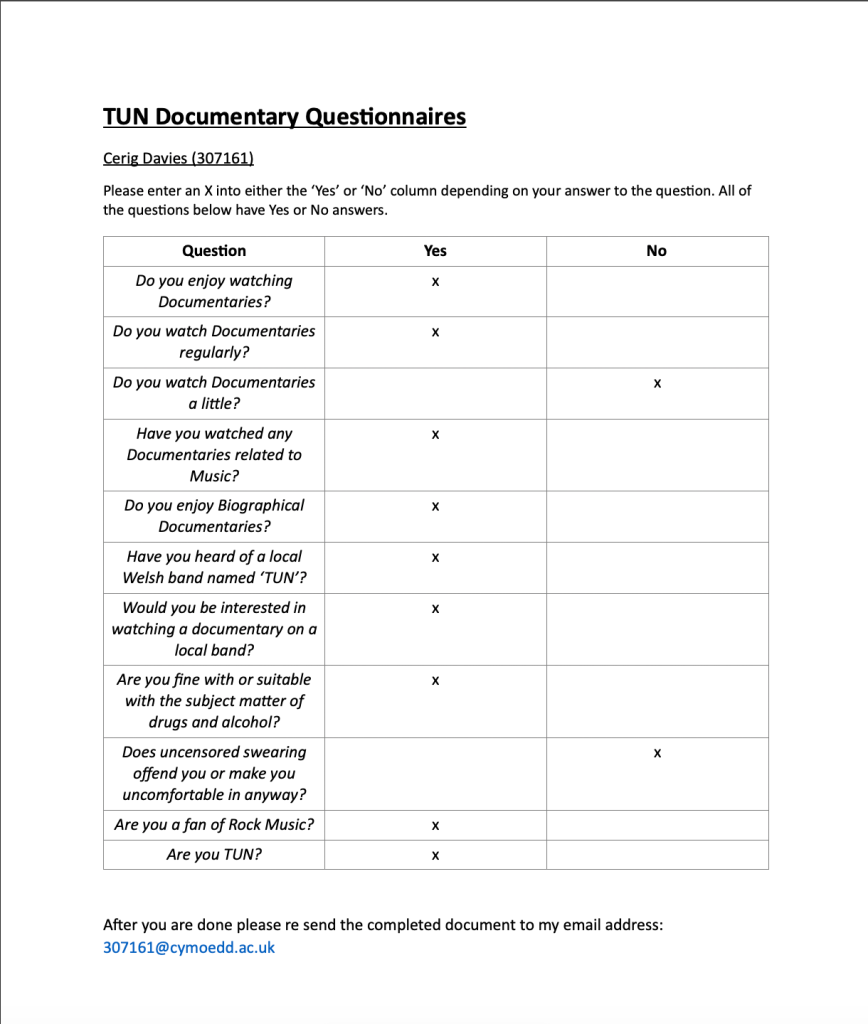

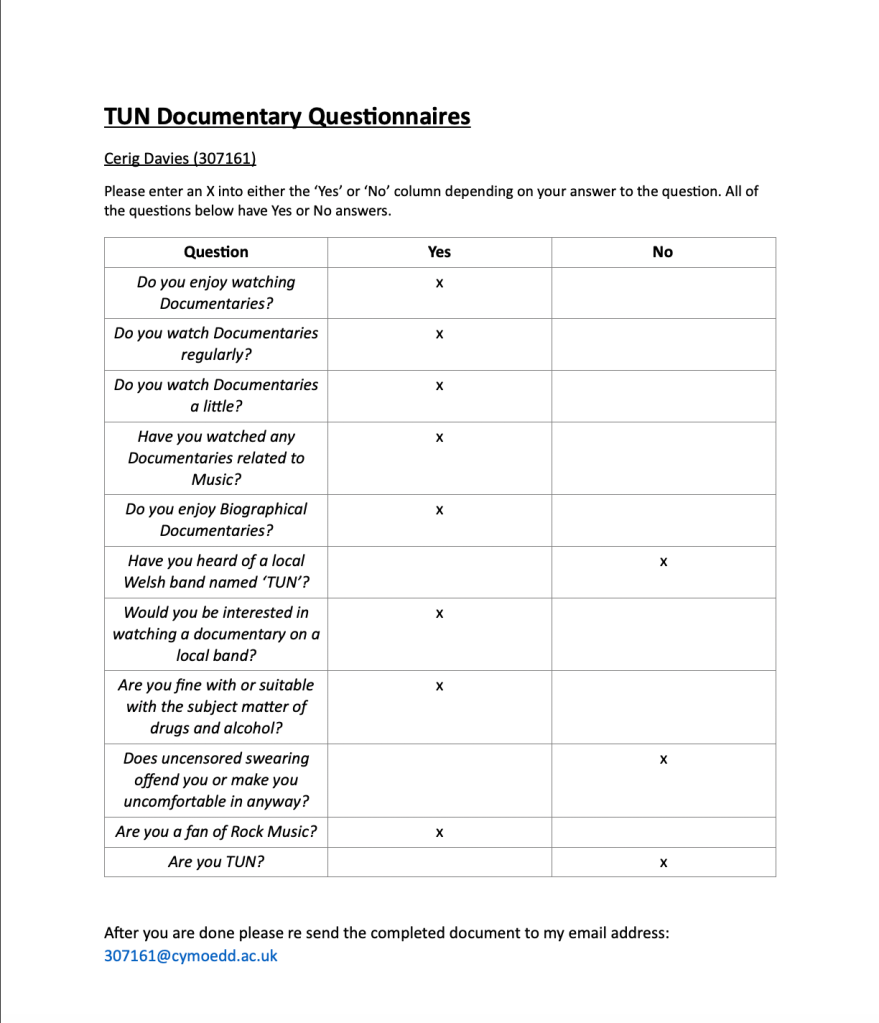

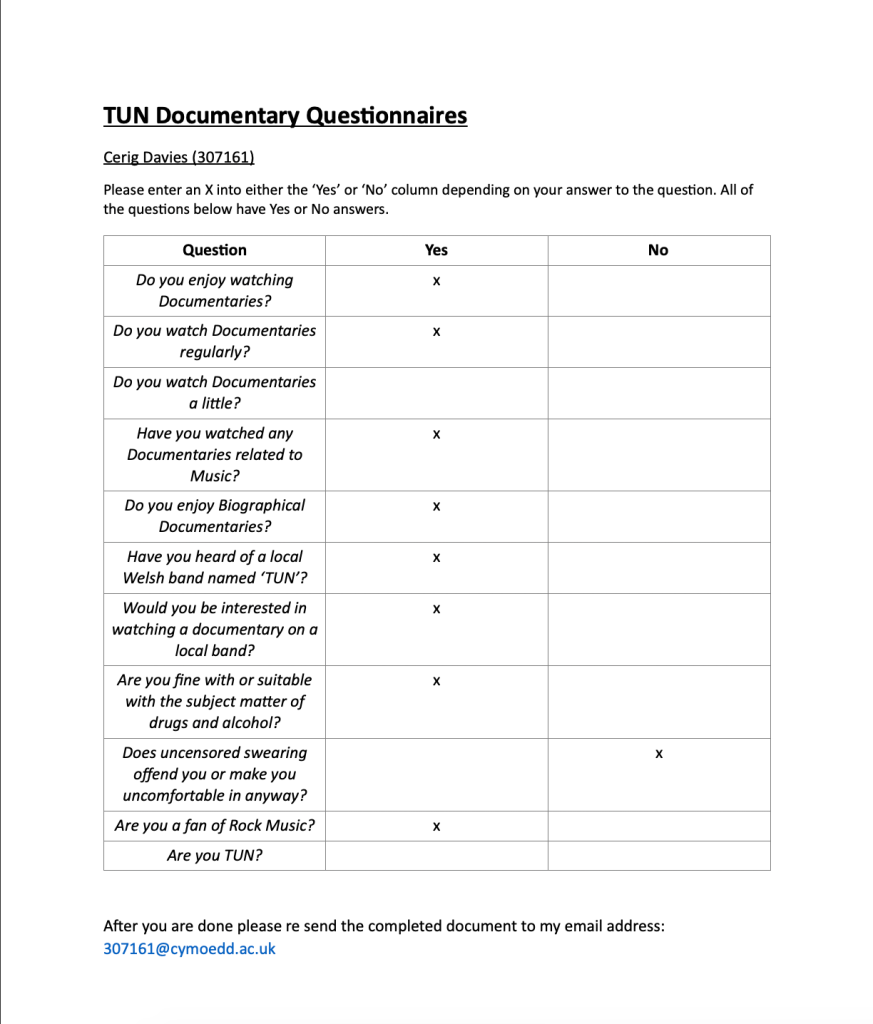
After looking through the questionnaire I created for this project, I found that all the people who filled in the questionnaire didn’t have any problems with uncensored swearing, talking about drugs etc and are comfortable with seeing it in the documentary. They all like rock music, and are all fans of documentaries with a majority of them watching documentaries regulary. The question “are you TUN?” I was not expecting people to answer with yes as people do not understand what it is to be TUN, so hopefully after they watch the documentary, I will ask them again and see what their answer is then.
 I'm a 90's Child...