What is PR? (Public Relations)
“Public Relations is about reputation – the result of what you do, what you say and what others say about you.”
“Public Relations is the discipline which looks after reputation, with the aim of earning understanding and support and influencing opinion and behaviour. It is the planned and sustained effort to establish and maintain goodwill and mutual understanding between an organisation and its public.”
Chartered institute of public relations, C.I.P.R. 2019. Chartered Institute of Public Relations. [Online]. [4 October 2019]. Available from: /content/policy/careers-advice/what-pr
What is PR used for?
“The aim of public relations is to inform the public, prospective customers, investors, partners, employees, and other stakeholders and ultimately persuade them to maintain a positive or favorable view about the organization, its leadership, products, or political decisions.”
Wikipedia. 2019. Wikipediaorg. [Online]. [4 October 2019]. Available from: https://en.wikipedia.org/wiki/Public_relations
What is a PR Stunt?
A PR Stunt (Publicity Stunt) is when a company, business, government and more plan a event that is created to draw in the public’s attention and let them know about their cause and product etc. Publicity Stunts can be created and funded by big companies, government employees, amateurs and even celebrities which has been seen a lot with people such as the Kardashians.
What is your own PR?
- Online Video Gaming
- YouTube
My public audience is friends and families but also strangers.
How will my audience think about my: Facebook
- That I am a weird person
- I have a sense of humour
- I am a geek
What personal information does my audience know?
- My name
- My Age and Birthday
- That I went to Rhydywaun
- That I live in Aberdare
- My Relationship status and who I am with
- My Likes
- Events I have been to
- Groups I am in
Is this Good PR or Bad PR?
Good, I have not posted anything bad or anything too personal onto my Facebook.
Bad Example of PR
Fyre Festival
Fyre Festival began as a video advertisement that at first was fine and got a lot of customers to purchase the many different packages available to them, until the creators of the festival were told that they could not use the original island they had rented due to them going against the owner who asked them specifically not to say that the island was Pablo Escobar’s island, and because of this everything just fell from there and the entire festival crashed, customers were left out in the cold and rain with soaked tents and beds and nothing but a shitty sandwich for food.

Target Audience for Television Advertisements
Lynx Body Spray
Lynx body spray’s target audience is Men and Women aged 18 – 30. Its targeted primarily towards men as in most advertisements you see an attractive, muscular man using the spray and then goes along with his day as women are falling for him or making out with him etc. Although the product is also targeted towards women also as it makes them unconsciously want this between them and they male partner, so they will purchase the spray believing that they will be attracted to their partner more with the spray like the women are in the advertisement.
Haven Holidays
Haven is targeted towards families more than anything else. They will primarily only focus on showing the children having fun at their many attractions, caravans, beaches etc. However it is not just aimed towards them as children can not just be left alone, they have to be accompanied by parents. So unconsciously parents are drawn to the advertisement as they will imagine what fun it would be like if they could go there and the time and memories they will have with their children there.
Coco Pops
Coco Pops are targeted towards young children as in all of the adverts you see children smiling eating the cereal with colourful, cartoon characters are jumping around having a good time whilst happy music, tone of voice and sound effects are played in the background to make the children happy and make the feel that the cereal will make them happy too.
Sunlife Funeral Care
The target audience for Funeral Cares is older people aged 65 and up. In all the adverts they always have someone famous as their spokesperson who is of similar age range and the actors in the advert are of similar age too with them also being accompanied by their “grandchildren” which makes the viewer feel obligated to plan out their funeral to not leave their children and even grandchildren left with the ‘burden’ of having to plan and pay it for you.
Persuasive Techniques
Emotional Appeal
2) Andrex Toilet Tissue
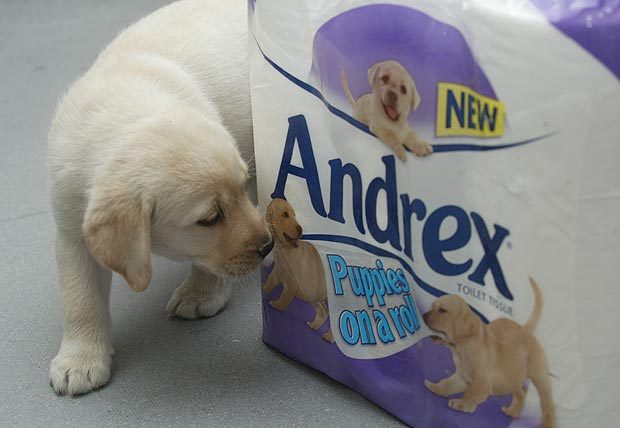
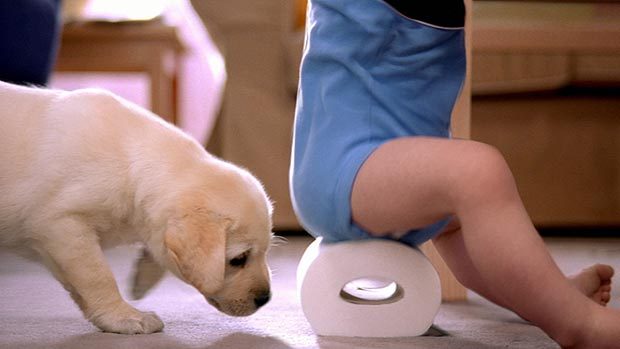
Andrex’s advertisements draw the attention of the viewer emotionally and allow them to remember the product by using a dog in everyone of their adverts. The dog has become a mascot for the products and you cannot go through any of their advertisements without seeing it, and people love it so much because mostly everyone loves dogs and things that are cute and adorable. This is a good form of emotional appeal as it does not make any of the viewers of consumers upset or turn them away from their product, it does the complete opposite and is probably going to make the consumer more likely to purchase the product and remember them.


2) McDonalds ‘Dead Dad Ad’
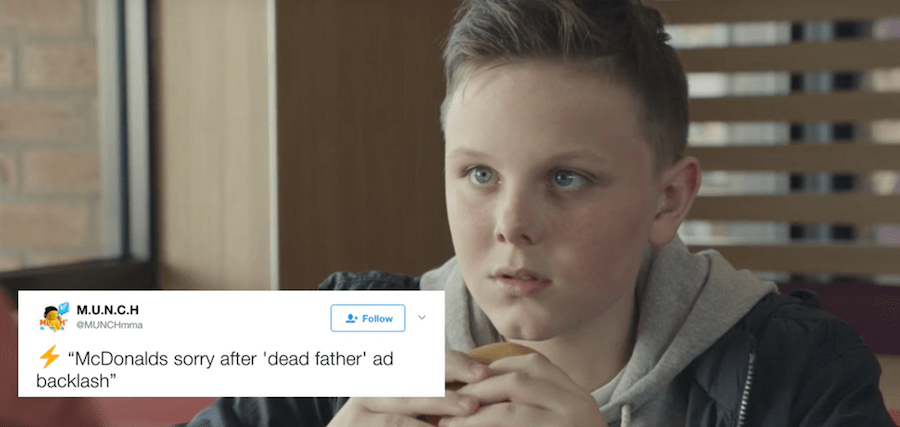
This is an example of where emotional appeal in advertisements goes wrong. This advertisement received a lot of backlash and was subsequently banned for being shown on television due to people believing the advert to be using ‘death’ to sell their product. The advertisement portrays a young teenager who has recently lost his father (reason unknown) and his mother talking about how different he is from his father until he purchases the same burger that his father used to purchase. This advert is stupid as you should never structure an advertisement around a death of anyone, human, animal nothing.
Men’s Cologne ‘Predator’ Work
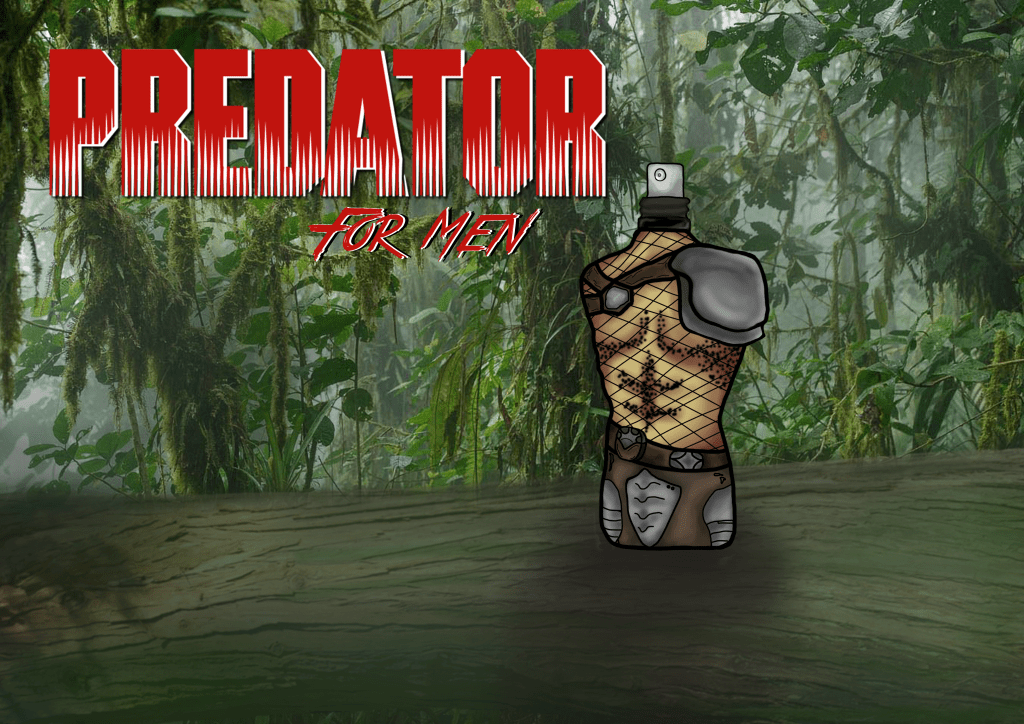
When it came to creating this cologne we were given a lesson to create the idea, decide our target audience, bottle design etc. Because of this me and Dan decided, due to the cologne being called Predator, to make it a limited edition Predator themed cologne where the cologne bottle would be shaped and designed as the torso of the Predator you see in the films and the lid itself would be the helmet and because of its limited edition, it could become a collectors item and we could have multiple types, with different designs of different predators from the films. I sketched a quick design from memory of what the Predators torso looked like in the shape of a cologne bottle and then create a similar design on Photoshop whilst also adding other pieces onto the design to make it pop more. All in all I actually enjoyed this task and feel that the final piece turned out well, however if I had more time to complete it, it would have turned out looking more complete and I could put the lid onto the poster as well.
Creating an Emotional Appeal

I created this rather quickly without actually concentrating on the task at hand, however I still believe that it turned out ok, there is too much blank space and the font could be better however as I have already said it was a rushed piece of work.
Gunn’s 12 Types and Styles
Donald Gunn came up with a theory that Advertisement follow particular structures and styles to convey different information and to sell their products. He came up with 12 different styles which are:
- ‘Demo’ – Demo is where the advertisement demonstrates to you what the product they are selling is capable of doing to try and make you buy their product instead of purchasing them from similar brands. A prime example for this is mobile phone and other tech companies like Apple, Sony etc.
- ‘Show the Problem’ – This is where the advertisement produces a problem to the viewer whether it be cords getting in your way, stained clothing, virus in your computer and many others, it then shows you that with their product you can remedy the situation. “Show the Problem’ and ‘Demo’ sometimes fall hand in hand a lot of the time and work well with each other.
- ‘Symbolise the Problem’ – Similar to the previous type of advertisement it shows how the product will fix a certain problem however it will describe the problem and product in an exaggerated analogy with over exaggerated visuals.
- ‘Comparison’ – It says it in the title, the product is compared to similar products from different brands to try and show how their product is better than others. You can see many examples of this with big supermarket chains, phone companies, car insurance and many more.
Example for ‘Demo’: https://www.youtube.com/watch?v=TOuF7ZbcCUs
Example for ‘Show the Problem’: https://www.youtube.com/watch?v=0xzN6FM5x_E
M&S Case Study
M&S is a brand and company that has been selling clothing since the 1920’s and food in the 1930’s. Their clothing is their most famous product and one in three women wear an M&S bra. However M&S are most known for their ‘Food Porn’ advertisements which were released to the world in 2004 which infamously have the tagline “This isn’t just food, It’s M&S food.” Since then M&S have released more advertisements however none of them included the phrase that we all know. If you were to ask someone how they remembered M&S though they would repeat that certain phrase or explain those adverts more than they would their newer newer advertisements.
It is now 2019 and only now has the tagline of “It’s M&S food” has returned, 15 years after is first premiere and this is why M&S form of advertising is a great one. They use close up of food being cut, diced, cooked, coated etc. and it make the viewer feel hungry and want to eat food, and then with the continued line of “This is not just food, it’s M&S food” makes the viewer subconciously believe that the food that you see only looks so good and appetising because it is from M&S and you will only get food that is that good from them. M&S are well known and also pioneers for many different things. They helped with Food rations for the WWII and even after the War had a Food Technology Department help to improve the quality and hygiene standards. They introduced the use of chilled cabinets to keep frozen food frozen whilst also being on display to shoppers, they were the pioneers of the Chicken Kiev and even had to create a new factory to produce the product because of how popular it was.
The advert begins with no actors, no high budget location set pieces, just a close up of a golden roasted chicken, which has a strong contrast in colours with the yellow-ish brown and the white of the chicken meat to draw the viewers eyes towards it. The advertisement continues with more close ups of food and only food, you cannot see any people or people’s hands, they do this to keep the audience focused on food and nothing but the food. They did this type of advertisement to subconsciously make the audience hungry and crave food, with the use of slow motion and displaying moist or hot food, it stimulates the human brain and makes us crave it, because everyone wants to eat food that looks that good. The narrators voice is smooth and quiet which gives a calming feeling over the audience making them relaxed and allows to just taking in the imagery of food with no worry.
My M&S Parody Advertisment
I enjoyed creating this advertisement, I learnt different techniques when it came to composition, angles etc. I wish I recored the footage in the correct settings and frames per second to get the slow motion look I wanted however I still enjoy how it turned out. The colours need to be more vibrant in some areas but that is something I can improve on for my Heinz advertisement in the future.
Successful Food Advertisements
I can remember watching this advertisement at a young age. Many people remember this advertisement due to the music like with the Cadbury’s Gorilla and even though they do not show much of the actual product or of Cadbury’s itself, you know it is a Cadbury’s advert due to the colours they use, with each person wearing a certain colour that is attributed to their type of Cabury’s Chocolate Bar. The use of humour and music is always a good way to draw in audience as people always like to laugh and the use of famous songs connects the older generations and draws in new for it being a catchy tune, and them even knowing the song. The advertisement is also a play on a older version of the same ad which will bring in people who had seen the original, also the quits cuts and movements keep the audience for losing interest without disorientating them.
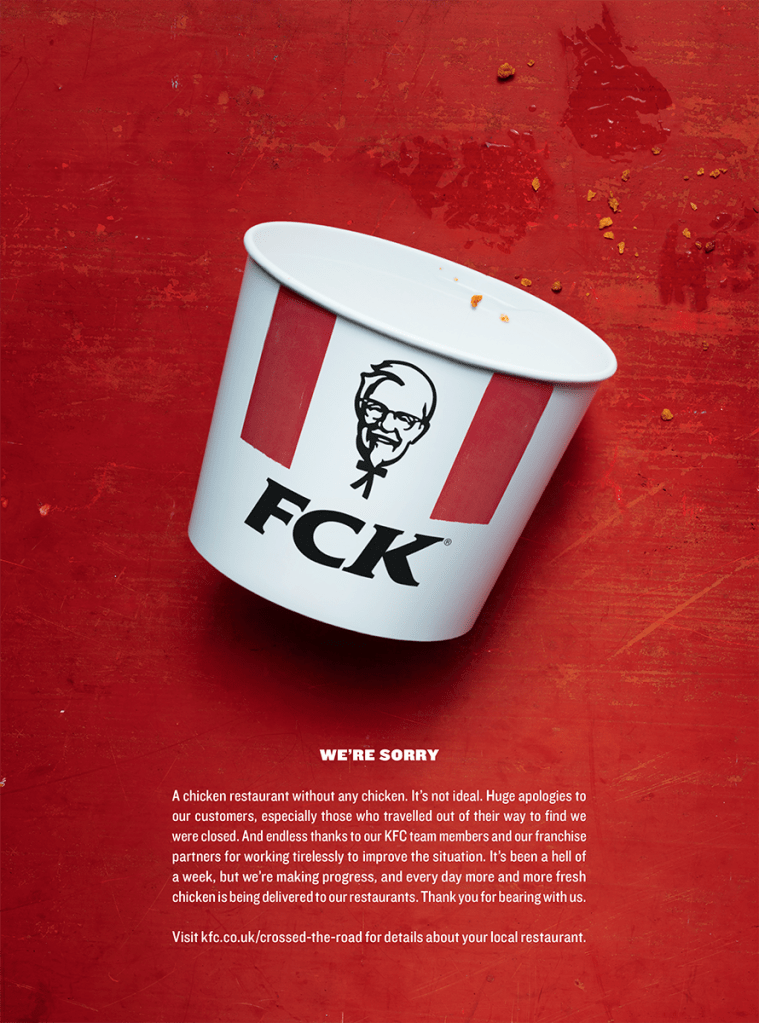
This ad was created by KFC because they had to close their stores around the UK due to them changing their chicken distributer abruptly. So, to say sorry, KFC released this poster which automatically calmed the uproar and gained them more customers. The use of humour in the switching of the letters on the bucket from ‘KFC’ to ‘FCK’ in a play on words to them apologising for the problem they had caused for their customers. Also the use of the bucket causes the audience to subconsciously think of KFC’s food without even having to see any of it.
Food Advertisements and the Laws (HFSS Law)
The HFSS (High Fats, Salts and Sugars) are a form of restrictions for Televised advertisement of Food in the UK. Due to a large of the population in the UK being overweight or obese, the HFSS began cracking down on advertisement for foods that had high fats, salts and or sugar contents. For example they removed mascots such as Tony the Tiger, Coco the Monkey and many others were removed from their respected advertisements, because of the friendly and colourful animated characters, children were drawn to the characters more than the actual cereal itself. However now with the mascots being removed from all advertisements that are aired on TV that the children will on purchase the food by how it looks. This doesn’t just go for just cereals and mascots however, all food that is considered junk food has mostly been removed from being aired on, however this does not stop them from being in Films, YouTube Advertisements, Internet etc.
Because of these and other changes, the percentage of adults and children in the UK being overweight and obese has gone down significantly, however it has not got rid of it completely.
The HFSS are also trying to make the laws more strict, by
Advertising Standard Authority
Who regulates UK advertising?
The Advertising Standard Authority (ASA) is a regulatory body which regulates the content that is seen in advertisements. If any advert is flagged and or criticised for any reason that goes against their terms of service, then the ASA will contact the advertiser and discuss what needs to be changed or in some cases have to have a full blown investigation into the complaint.
Why is advertising regulated?
Advertisements must be regulated due to things that can be shown in advertisements such as sexual content, drugs, alcohol, and more as it many offended or make audience upset. Also advertisements must be created for a target audience and shown at a certain for time, for example you cannot show a condom advertisement at 9am because you don’t want your young child to be watching Television and see that. This is why advertisements and even television shows are shown at certain times as they know their target audience will be able to see them. An example of this would be television shows shown at past 8pm are for usually people over the age of 16.
What does the ASA regulate?
ASA regulates advertisements that are shown on media sectors such as:
- Radio
- Television
- Film
- Cinema
- Website
- YouTube
- Internet
 I'm a 90's Child...